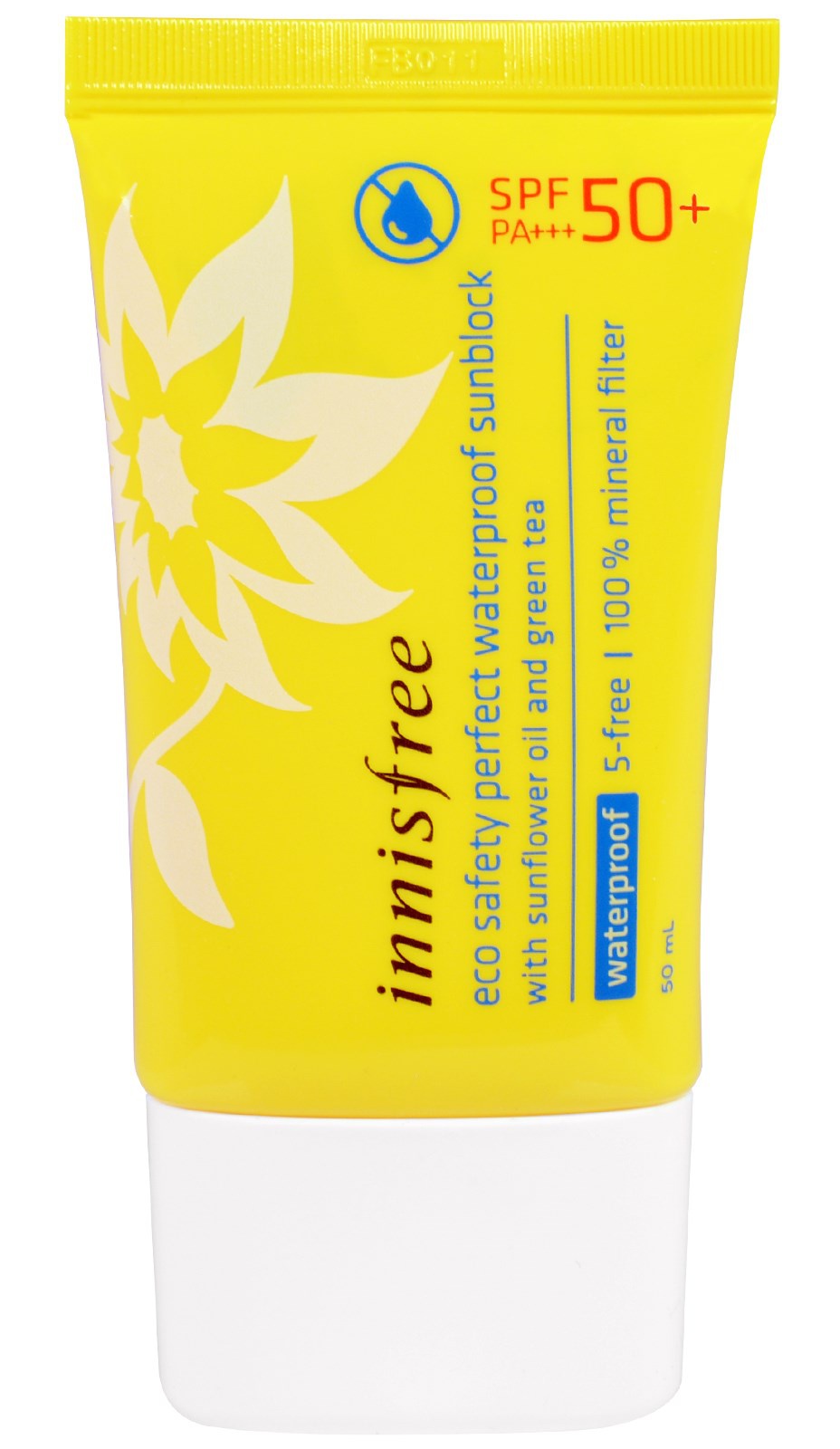
innisfree Eco Safety Perfect Spf 50 (Discontinued)
The innisfree Eco Safety Perfect Spf 50 was a popular daily sun protection staple from the beloved Korean beauty brand, innisfree. Designed as a hybrid sunscreen, it utilized both physical filters like Titanium Dioxide and Zinc Oxide alongside chemical filters to provide robust broad-spectrum SPF 50 defense. The inclusion of Cyclopentasiloxane ensured a smooth, silicone-based glide, allowing the product to sit comfortably on the skin without an overly heavy or greasy residue. As part of the 'Eco Safety' line, it was formulated to be gentler on the skin compared to traditional high-protection sunscreens. Although this specific version has been discontinued, it was highly regarded for its ability to offer high UV protection while maintaining a wearable texture. The formula aimed to balance effective sun shielding with skin-conditioning properties, making it a reliable choice for those who prioritized both safety and performance in their K-beauty routine.
Our Analysis
Our analysis of the innisfree Eco Safety Perfect Spf 50 classifies it as having a LOW comedogenic risk level. The only ingredient flagged in the formulation is stearic acid, which holds a rating of 2 out of 5 on the comedogenic scale. Stearic acid is a fatty acid used as a thickening agent and emollient; while it is generally well-tolerated, it may pose a minor risk for those with very oily or congestion-prone skin. However, for most users, this level is considered safe. The presence of soothing Zinc Oxide further helps in minimizing potential irritation.
Skin Type Recommendations
This sunscreen is ideal for normal, combination, and sensitive skin types that benefit from hybrid mineral-chemical protection. Those with very oily or highly acne-prone skin should be mindful of the stearic acid, though the overall risk remains low. It is generally safe for daily use on most skin types.
Flagged Ingredients
Found in many butters; thickening agent with low-moderate risk.
Want Deeper Analysis?
Run our MACR (Multi-Axis Comedogenic Risk) analysis to get a comprehensive 5-axis risk assessment. This AI-powered analysis evaluates ingredients for Plugging Risk, Barrier Damage, Fungal Acne Risk, Oxidation Risk, and real-world User Reports — giving you personalized scores for your skin type.