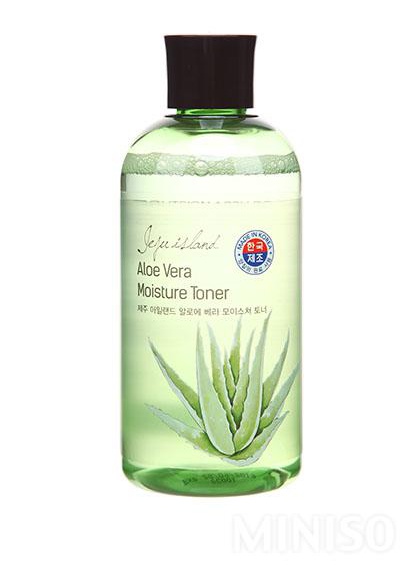
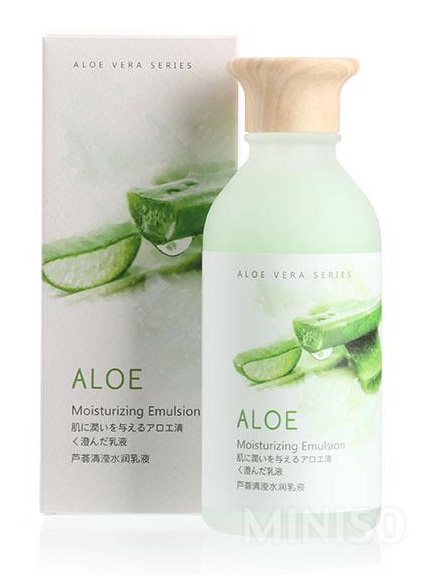
MINISO Aloe Vera Moisturizing Lotion
The MINISO Aloe Vera Moisturizing Lotion is marketed as a soothing and hydrating daily facial moisturizer designed to harness the natural benefits of Aloe Barbadensis. Its formula begins with a hydrating base of Aqua and humectants like Propylene Glycol and Butylene Glycol, which work together to attract moisture to the skin's surface. The inclusion of Dimethicone provides a smooth, silky slip during application, helping to create a protective barrier that prevents transepidermal water loss. While the texture feels lightweight and refreshing—typical of aloe-based products—the underlying formulation is quite complex. This lotion aims to provide immediate relief for dehydrated skin, leaving a soft finish. However, users should look closely at the emollient profile, as it contains specific synthetic esters and thickeners used to enhance the product's feel and spreadability. While it may feel cooling on the skin, those with specific sensitivities or blemish-prone skin need to evaluate how these structural ingredients interact with their pores.
Our Analysis
Our analysis of the MINISO Aloe Vera Moisturizing Lotion reveals a High comedogenic risk level, which is a significant concern for anyone prone to breakouts. The primary culprit is Isopropyl Myristate, which carries a maximum rating of 5/5. This penetration enhancer is notorious for diving deep into the follicle and hardening, leading to stubborn blockages. Furthermore, the inclusion of Algin (rated 4/5), a thickener derived from brown algae, can create a film that further congests the skin. Even the inclusion of Capric/Caprylic Triglyceride (2/5) adds a cumulative risk, making this formula likely to trigger acne in susceptible individuals.
Skin Type Recommendations
This product is best avoided by oily, combination, and acne-prone skin types due to the high concentration of Isopropyl Myristate. While it may provide temporary relief for very dry skin that is not prone to congestion, the risk of developing comedones makes it unsuitable for anyone dealing with active acne or enlarged pores.
Flagged Ingredients
Penetration enhancer that dives deep into pores and hardens, causing blockages.
Polysaccharide thickener derived from brown algae; creates clogging films.
Fractionated coconut oil; removed most clogging long-chain acids but can still affect some.
Want Deeper Analysis?
Run our MACR (Multi-Axis Comedogenic Risk) analysis to get a comprehensive 5-axis risk assessment. This AI-powered analysis evaluates ingredients for Plugging Risk, Barrier Damage, Fungal Acne Risk, Oxidation Risk, and real-world User Reports — giving you personalized scores for your skin type.