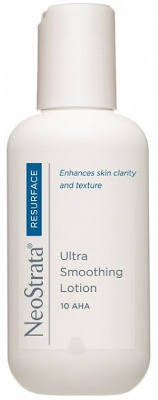
Neostrata Ultra Smoothing Lotion
Neostrata Ultra Smoothing Lotion is a potent exfoliating treatment designed to refine skin texture and improve overall clarity. Formulated with a 10% Alpha Hydroxy Acid (AHA) concentration—specifically Glycolic and Citric Acids—this lotion effectively targets the buildup of dead skin cells to reveal a smoother, more radiant complexion. To balance the intensity of these AHAs, the formula includes Arginine, an amino acid that helps minimize potential irritation, making the high acid content more tolerable for regular use. While it excels at chemical exfoliation and brightening dull skin, the inclusion of specific emollients gives it a smooth, spreadable feel that many users find comfortable for both face and body. This product is highly sought after for its ability to tackle fine lines, rough patches, and uneven skin tone. However, for those monitoring their skincare for pore-clogging potential, a closer look at the base ingredients is necessary. Despite its powerful AHA profile, the formula relies on specific fatty acid esters and thickeners to achieve its lotion consistency, which may present challenges for certain skin types prone to congestion.
Our Analysis
Our analysis of the Neostrata Ultra Smoothing Lotion reveals a high comedogenic risk profile, primarily due to the inclusion of Isopropyl Palmitate. This fatty acid ester carries a high rating of 4/5 for its ability to penetrate and block pores. Furthermore, while Cetearyl Alcohol and Stearic Acid carry lower risks individually, their combination in a rich lotion base can exacerbate congestion for those already prone to breakouts. Although the 10% AHA concentration is excellent for surface exfoliation, the emollient base contains ingredients that may counteract these benefits by trapping debris within the follicles.
Skin Type Recommendations
This lotion is best suited for dry or mature skin types seeking intensive chemical exfoliation for texture and fine lines. However, it is not recommended for oily, acne-prone, or congested skin. The high concentration of pore-clogging ingredients like Isopropyl Palmitate makes it likely to trigger breakouts in those susceptible to acne.
Flagged Ingredients
Fatty acid ester documented to penetrate and block pores.
Pure Vitamin E is thick and sticky; safe in small amounts as an antioxidant, but potentially clogging in pure oil form.
Fatty alcohol emollient with low-moderate comedogenicity on its own. However, when combined with Ceteareth-20, the synergistic effect can significantly increase pore-clogging potential (combined rating of 4).
Found in many butters; thickening agent with low-moderate risk.
Want Deeper Analysis?
Run our MACR (Multi-Axis Comedogenic Risk) analysis to get a comprehensive 5-axis risk assessment. This AI-powered analysis evaluates ingredients for Plugging Risk, Barrier Damage, Fungal Acne Risk, Oxidation Risk, and real-world User Reports — giving you personalized scores for your skin type.