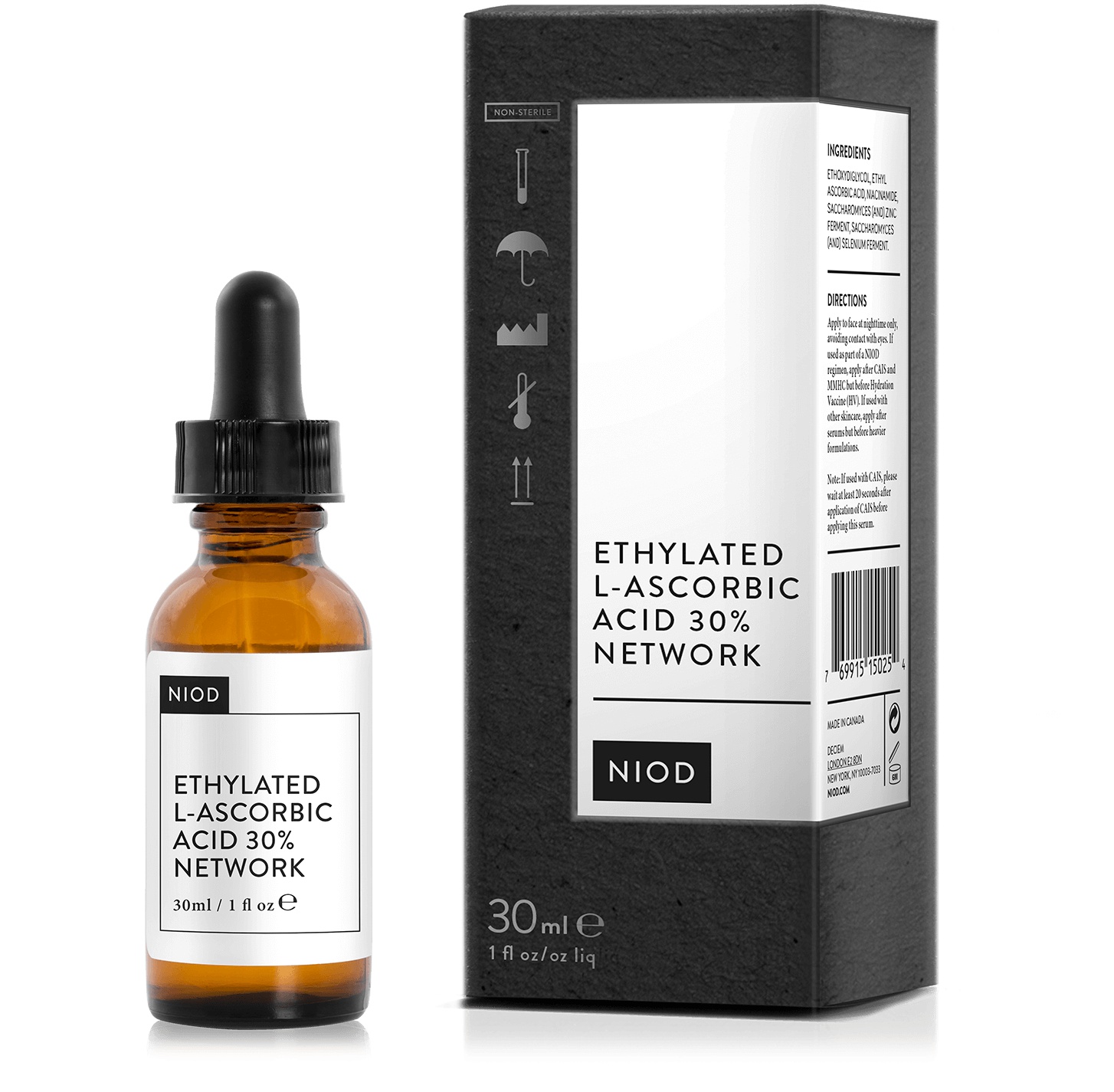
NIOD Ethylated L-Ascorbic Acid 30% Network
NIOD Ethylated L-Ascorbic Acid 30% Network is a sophisticated, highly concentrated vitamin C serum designed for those seeking advanced antioxidant protection without the instability of traditional L-ascorbic acid. This formula features a 30% concentration of stabilized Vitamin C, which targets uneven skin tone, signs of aging, and environmental damage. Unlike many water-based serums that oxidize quickly, this water-free network stays potent for longer and delivers consistent results. Key ingredients like Superoxide Dismutase and Zinc Ferment work alongside the Vitamin C to neutralize free radicals and soothe the skin. The texture is a lightweight, slightly viscous liquid that absorbs efficiently, providing an immediate glow without a greasy residue. Since it avoids common oils and fatty acids, it offers a clean delivery system that doesn't feel heavy. It is an excellent choice for users looking to brighten their complexion and improve skin resilience while maintaining a high-performance, science-backed skincare routine.
Our Analysis
Our analysis of the NIOD Ethylated L-Ascorbic Acid 30% Network confirms a very low comedogenic risk. The formula is remarkably clean, with no flagged pore-clogging ingredients found in our database. By utilizing a glycol-based delivery system rather than heavy oils or thickeners like isopropyl myristate or cocoa butter, it significantly minimizes the risk of congestion or breakouts. The inclusion of Zinc Ferment also provides subtle anti-inflammatory benefits, which is a plus for those prone to blemishes. This is a highly 'acne-safe' option for individuals seeking a potent Vitamin C treatment without the fear of triggering new comedones.
Skin Type Recommendations
This product is ideal for oily, combination, and dry skin types, particularly those with acne-prone concerns. Its non-comedogenic formula is a standout for those who usually react to oil-heavy serums. However, due to the high 30% concentration, extremely sensitive skin types should introduce it gradually and perform a patch test.
Flagged Ingredients
This product does not contain known high-risk comedogenic ingredients.
MACR Analysis
5-Axis AI-Powered Risk Assessment
Recommendations
This serum is best suited for individuals with resilient skin who are seeking antioxidant benefits but should be approached with caution by those prone to sensitivity or breakouts.
Normal skin types, Individuals seeking antioxidant benefits with a stable Vitamin C derivative
Oily skin types, Acne-prone skin, Sensitive skin, Dry skin
Individuals with highly reactive or compromised skin barriers, Those with known sensitivities to penetration enhancers or Vitamin C derivatives
- •Patch test on a small area before full facial application.
- •Start using 2-3 times per week and gradually increase frequency if tolerated.
- •Ensure proper hydration with a barrier-supporting moisturizer.
- •Store in a cool, dark place to minimize oxidation of Ethyl Ascorbic Acid.
Overall Risk Score
Lower is better
Score by Skin Type
Lower is better
Same product, different risks based on your skin type
This leave-on serum presents a moderate risk profile, primarily driven by the penetration-enhancing properties of Ethoxydiglycol and the oxidation potential of Ethyl Ascorbic Acid. While containing some beneficial ingredients, its overall score indicates it may not be ideal for highly sensitive or acne-prone skin due to potential barrier disruption and irritation.
Risk Breakdown
Ingredient Interactions
These ingredients may interact to increase risk beyond their individual scores.
Ethoxydiglycol's penetration-enhancing properties can increase the absorption of Ethyl Ascorbic Acid, potentially leading to increased oxidation and irritation if the product is not formulated optimally.
Ethoxydiglycol can solvate lipids in the stratum corneum, creating more permeable pathways for the Ethyl Ascorbic Acid to penetrate. This enhanced penetration can accelerate the oxidation of the Vitamin C derivative, potentially generating more reactive species and increasing the risk of irritation or free radical damage, which can then trigger breakouts.
Why This Score?
The overall score is calculated by weighting each axis (PR, BR, FR, OR, UR) by its importance. The top ingredients, Ethoxydiglycol and Ethyl Ascorbic Acid, contribute significantly to the Barrier Risk (BR) and Oxidation Risk (OR) respectively. The synergistic effect between these two ingredients also elevates the overall risk. The inclusion of fermented ingredients and the user-reported (UR) data add to the score.
Main factors:
- •Barrier Risk (BR)
- •Oxidation Risk (OR)
- •User-Reported (UR)
Reducing factors:
- •Low PR score
- •Low FR score
- •Ingredients in the latter half of the INCI list are at lower concentrations
Skin Type Considerations
This analysis uses the Multi-Axis Comedogenic Risk (MACR) system. Results are AI-estimated and cannot account for actual ingredient concentrations. Individual reactions may vary. Consult a dermatologist for personalized advice.