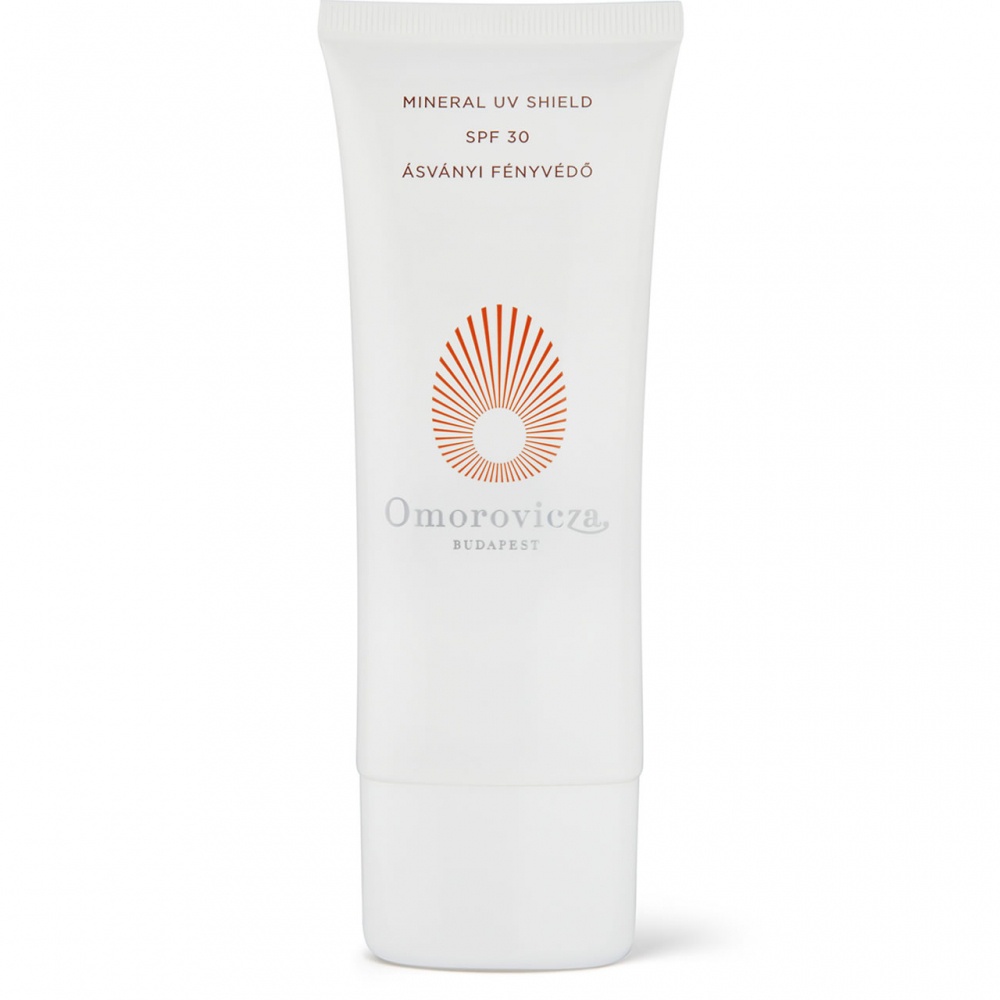
Omorovicza Uv Mineral Shield Spf 30
Omorovicza UV Mineral Shield SPF 30 is a high-end physical sunscreen designed to protect the complexion while utilizing the brand's signature Hungarian Thermal Water. This SPF 30 formula provides broad-spectrum protection using Zinc Oxide, which acts as a physical barrier against harmful UV rays. The formula is enriched with Squalane, a skin-identical lipid that helps maintain the moisture barrier, and Hungarian Thermal Water, known for its mineral-rich healing properties. To help refine the appearance of skin texture, the product includes Silica, which offers a soft-focus effect and helps manage shine. While it offers the luxury and hydration Omorovicza is known for, the texture is relatively rich and emollient-heavy. It is designed to sit comfortably under makeup, though its waxy components provide a substantial protective layer. Users will appreciate the inclusion of Squalane and Tocopherol for antioxidant benefits, though those with specific pore-clogging concerns should evaluate the ingredient profile carefully to see how it fits into a clear-skin regimen.
Our Analysis
Our analysis flags Omorovicza UV Mineral Shield SPF 30 as a High Risk product for those with acne-prone skin. The primary concern is Stearyl Heptanoate, a waxy solid with a high comedogenic rating of 4/5 that can physically block the follicular opening. The formula also contains several level 2 ingredients, including Caprylic/Capric Triglyceride, Stearic Acid, and Apricot Kernel Oil. While individually these are considered low-to-moderate risks, their combined presence in a single formula increases the potential for congestion and breakouts in sensitive or oily skin types.
Skin Type Recommendations
This sunscreen is best suited for individuals with dry or mature skin who are not prone to breakouts and desire a rich, mineral-based protectant. It is not recommended for oily, combination, or acne-prone skin types due to the high concentration of comedogenic waxes and oils like Stearyl Heptanoate.
Flagged Ingredients
Waxy solid that physically blocks the follicular opening.
Fractionated coconut oil; removed most clogging long-chain acids but can still affect some.
Fatty alcohol emollient with low-moderate comedogenicity on its own. However, when combined with Ceteareth-20, the synergistic effect can significantly increase pore-clogging potential (combined rating of 4).
Found in many butters; thickening agent with low-moderate risk.
Similar to Almond oil; moderate Oleic acid content.
Pure Vitamin E is thick and sticky; safe in small amounts as an antioxidant, but potentially clogging in pure oil form.
Want Deeper Analysis?
Run our MACR (Multi-Axis Comedogenic Risk) analysis to get a comprehensive 5-axis risk assessment. This AI-powered analysis evaluates ingredients for Plugging Risk, Barrier Damage, Fungal Acne Risk, Oxidation Risk, and real-world User Reports — giving you personalized scores for your skin type.