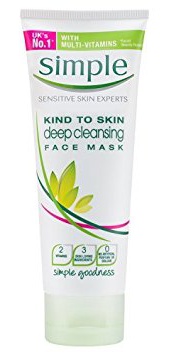
Simple Deep Cleansing Face Mask
The Simple Deep Cleansing Face Mask is a clay-based treatment designed to draw out impurities while maintaining the brand's signature 'kind to skin' philosophy. Formulated primarily with Kaolin clay, this mask works to absorb excess sebum and refine the appearance of pores, making it a popular choice for those looking to refresh a dull complexion. The inclusion of Glycerin helps to counteract the drying effects of clay, ensuring the skin feels soft rather than stripped after use. Its texture is thick and creamy, gliding onto the skin effortlessly thanks to emollients like Paraffinum Liquidum and Glyceryl Stearate. While Simple is often a go-to for sensitive skin due to its lack of harsh perfumes and dyes, a deeper look at the ingredient list is necessary for those with specific acne concerns. This mask aims to provide a detoxifying experience, but the presence of certain marine-derived extracts may be a hidden hurdle for users struggling with persistent congestion or inflammatory breakouts.
Our Analysis
Our analysis of the Simple Deep Cleansing Face Mask indicates a MODERATE comedogenic risk level. The most significant concern is Algae Extract, which carries a 5/5 comedogenic rating. This ingredient is high in iodides, which can irritate the pore lining and trigger micro-comedones and inflammation. Additionally, the formula contains Cetearyl Alcohol. While this fatty alcohol is a common emollient, it can significantly increase in pore-clogging potential when formulated alongside certain other ingredients. For those with acne-prone skin, these specific components may lead to breakouts despite the mask's purifying Kaolin base.
Skin Type Recommendations
This mask is best suited for oily or combination skin types that are not prone to acne. The Kaolin clay is excellent for managing surface shine. However, we do not recommend this product for acne-prone or highly sensitive skin due to the high comedogenic rating of the algae extract.
Flagged Ingredients
Rich in iodides which irritate the pore lining, triggering inflammation and micro-comedones.
Fatty alcohol emollient with low-moderate comedogenicity on its own. However, when combined with Ceteareth-20, the synergistic effect can significantly increase pore-clogging potential (combined rating of 4).
Want Deeper Analysis?
Run our MACR (Multi-Axis Comedogenic Risk) analysis to get a comprehensive 5-axis risk assessment. This AI-powered analysis evaluates ingredients for Plugging Risk, Barrier Damage, Fungal Acne Risk, Oxidation Risk, and real-world User Reports — giving you personalized scores for your skin type.