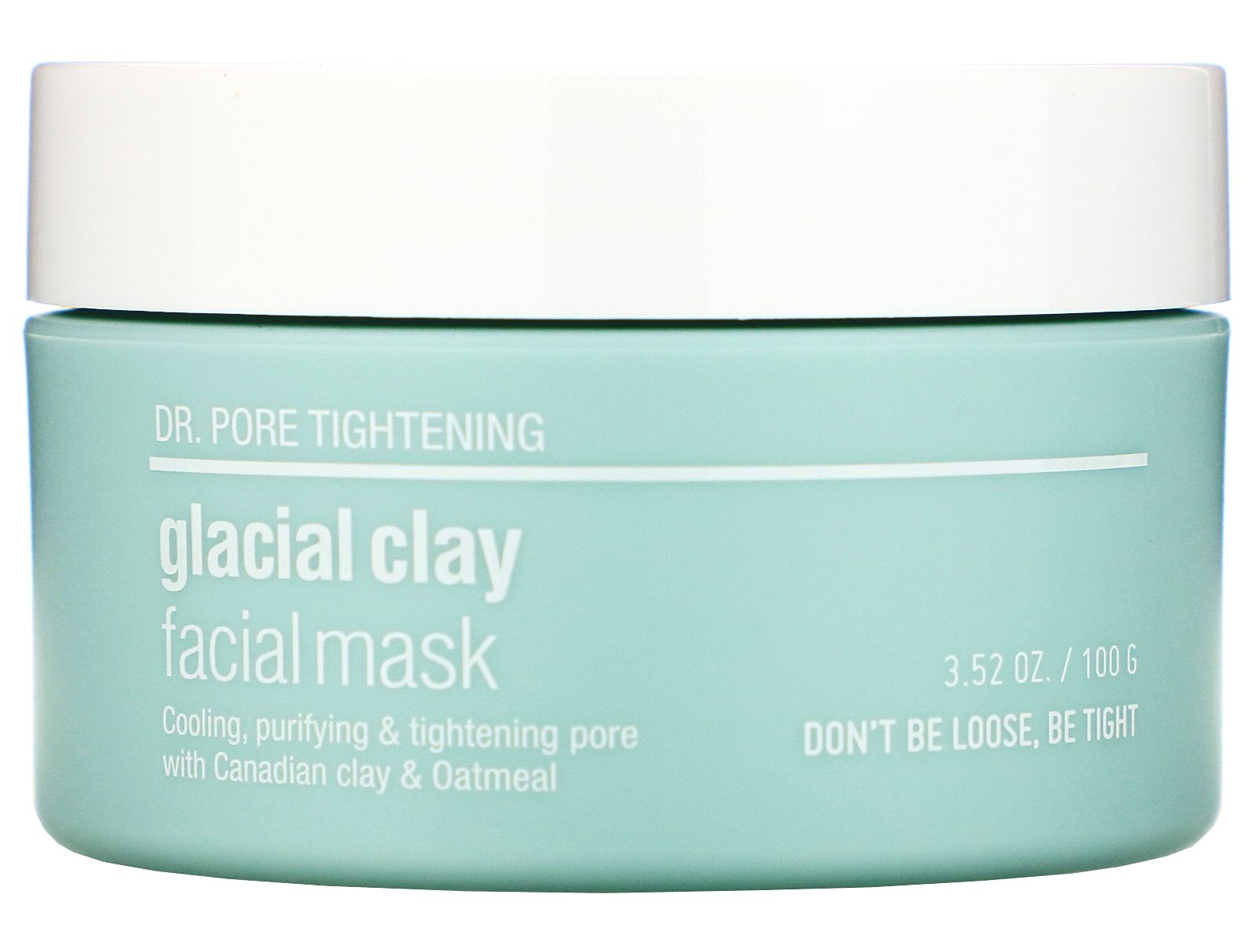
Skin&Lab Dr. Pore Tightening Glacial Clay Facial Mask
Skin&Lab Dr. Pore Tightening Glacial Clay Facial Mask is a specialized wash-off treatment formulated to address enlarged pores and excess oil production. At the heart of this mask is a blend of Kaolin and Bentonite clays, which work synergistically to draw out impurities and toxins from deep within the pores. To balance the intense purifying action of the clays, the formula includes Avena Sativa (Oat) Kernel Flour, a celebrated ingredient known for its soothing and anti-inflammatory properties, ensuring the skin feels calm rather than stripped. The inclusion of Glycerin helps maintain essential moisture during the drying process. While the texture is rich and creamy, providing a satisfying application experience, the formulation is more complex than a standard clay mask. It aims to tighten the appearance of pores while improving overall skin texture. Users will appreciate the cooling sensation often associated with glacial clay products, making it a refreshing addition to a weekly skincare ritual focused on oil control and pore maintenance. This product provides a deep clean while attempting to keep the skin barrier nourished through its secondary botanical inclusions.
Our Analysis
Our analysis classifies the Skin&Lab Dr. Pore Tightening Glacial Clay Facial Mask as having a Moderate comedogenic risk. While the primary clay ingredients like Kaolin and Bentonite are acne-safe, the formula contains Glyceryl Stearate SE (Rating 3), a self-emulsifying agent that can be problematic for those highly prone to breakouts. Additionally, Stearic Acid and Cetearyl Alcohol carry low-to-moderate risks (Rating 2). Crucially, Cetearyl Alcohol's pore-clogging potential can increase significantly when combined with certain surfactants. For those with highly reactive or acne-prone skin, these specific emollients may cause congestion despite the purifying benefits of the clays.
Skin Type Recommendations
This mask is best suited for oily and combination skin types needing intense sebum control. However, due to the moderate comedogenic risk from Glyceryl Stearate SE and fatty alcohols, individuals with active acne or highly clog-prone skin should proceed with caution and patch test before full application.
Flagged Ingredients
Self-emulsifying version contains stearates that can clog pores.
Found in many butters; thickening agent with low-moderate risk.
Fatty alcohol emollient with low-moderate comedogenicity on its own. However, when combined with Ceteareth-20, the synergistic effect can significantly increase pore-clogging potential (combined rating of 4).
Want Deeper Analysis?
Run our MACR (Multi-Axis Comedogenic Risk) analysis to get a comprehensive 5-axis risk assessment. This AI-powered analysis evaluates ingredients for Plugging Risk, Barrier Damage, Fungal Acne Risk, Oxidation Risk, and real-world User Reports — giving you personalized scores for your skin type.