
You’ve perfected your double-cleansing routine, you’re using your prescribed retinoids, and you haven’t missed a moisturizer application in weeks. Yet, for some reason, persistent whiteheads and stubborn clogs continue to appear along your cheeks and jawline. When the usual suspects—hormones, diet, and stress—aren’t the obvious culprits, it’s time to look closer at your ingredient labels.
Is Your Routine Acne-Safe?
Do not guess. Instantly check your products for pore-clogging ingredients with our AI-powered tool.
Check Ingredients NowIn the world of dermatology, not all emollients are created equal. One specific ingredient that frequently flies under the radar while wreaking havoc on acne-prone skin is Acetylated Lanolin Alcohol. In this guide, we will dive into the science of why this ingredient is a major red flag for anyone prone to breakouts and how you can spot it before it spots your face.
What is Acetylated Lanolin Alcohol?
To understand this ingredient, we first have to look at its source: lanolin. Lanolin is a waxy substance secreted by the sebaceous glands of sheep to help shed water from their coats. It is a powerhouse moisturizer, often used in nipple creams and heavy balms for extremely dry skin.
Acetylated Lanolin Alcohol is a chemically modified version of lanolin. Through a process called acetylation, the lanolin is treated with acetic anhydride. This process transforms the thick, sticky wax into a thinner, more spreadable liquid that feels less greasy on the skin. While this makes it a favorite for cosmetic chemists who want a "velvety" skin feel in foundations and creams, the chemical change significantly alters how the ingredient interacts with your pores.
Why It’s a Red Flag for Acne-Prone Skin
In dermatology, we use a scale called the Comedogenicity Scale to rank how likely an ingredient is to clog pores. The scale ranges from 0 (non-comedogenic) to 5 (highly comedogenic).
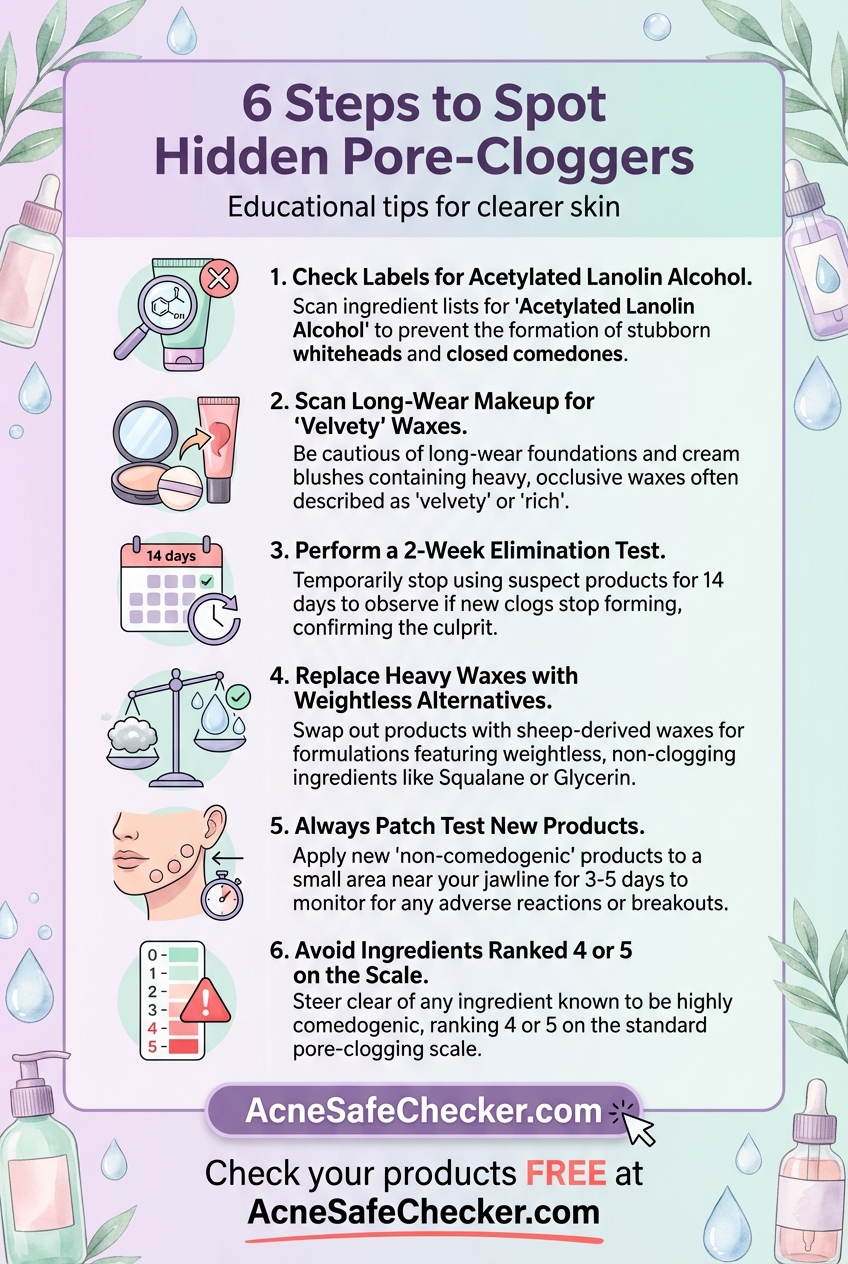
Acetylated Lanolin Alcohol consistently ranks as a 4 or 5 on this scale. This means it has a very high probability of causing comedones (blackheads and whiteheads).
The Science of Pore Clogging
When you apply a product containing acetylated lanolin alcohol, the acetylation process allows the ingredient to penetrate the follicular opening more deeply than pure lanolin. Once inside the pore, it can mix with your natural sebum and dead skin cells, forming a "plug." This plug creates an oxygen-free environment where Cutibacterium acnes (the bacteria responsible for inflammatory acne) thrives.
Furthermore, because it is an occlusive emollient, it can trap other potentially irritating ingredients against the skin, leading to a double-whammy of follicular occlusion and contact irritation.
Where Does This Ingredient Hide?
Because of its ability to provide a smooth, emollient texture, acetylated lanolin alcohol is a common staple in both luxury and drugstore products. You are most likely to find it in:
- Long-wear Foundations: It helps the pigment spread evenly and stick to the skin.
- Heavy Night Creams: Used to provide a "rich" feel to anti-aging products.
- Lipstick and Lip Liners: Provides glide and prevents the product from drying out.
- Cream Blushes and Bronzers: Helps the product melt into the skin for a dewy finish.
Identifying It on the Label
Reading an ingredient deck can feel like deciphering a different language. To protect your skin, look for these specific terms on the back of your bottles:
- Acetylated Lanolin Alcohol
- Lanolin Alcohol (though slightly less comedogenic than the acetylated version, it is still risky for acne-prone individuals)
- Acetylated Lanolin
- Lanolin Anhydrous
Safer Alternatives for Clear Skin
If you have acne-prone skin, you don’t have to sacrifice a dewy glow or hydrated skin. There are plenty of "non-comedogenic" emollients that provide the same skin-softening benefits without the risk of a breakout.
- Squalane: Derived from olives or sugarcane, squalane mimics your skin’s natural oils without clogging pores. It is highly stable and suitable for almost all skin types.
- Glycerin: A humectant that draws moisture into the skin. It is weightless and carries a comedogenicity rating of 0.
- Caprylic/Capric Triglyceride: Derived from coconut oil and glycerin, this emollient provides a smooth feel without the heavy, pore-clogging nature of whole coconut oil or lanolin derivatives.
- Hyaluronic Acid: For hydration without any lipid-based heaviness, look for serums containing various molecular weights of hyaluronic acid.
How to Transition Your Routine
If you’ve discovered that your favorite foundation or moisturizer contains acetylated lanolin alcohol, don’t panic. Here is the best way to handle the transition:
- The Elimination Test: Stop using the suspected product for at least two weeks. Acne takes time to form and time to clear; you likely won't see a change overnight, but you should notice fewer new clogs forming.
- Patch Test New Products: When switching to a lanolin-free alternative, apply the new product to a small area near your jawline for 3–5 days to ensure no new reactions occur.
- Consult a Professional: If your skin doesn't clear up after removing known comedogens, visit a board-certified dermatologist. There may be other factors, such as hormonal fluctuations or fungal acne, that require medical intervention.
The Final Verdict
Acetylated lanolin alcohol is a fantastic ingredient for someone with severely dry, non-acne-prone skin who needs a heavy-duty barrier. However, for those of us struggling with oily skin or persistent breakouts, it is an ingredient best avoided.
By becoming a savvy label-reader and prioritizing non-comedogenic alternatives, you take back control over your skin's health. Remember: a product can feel amazing on your skin today, but if it's clogging your pores, it isn't doing you any favors in the long run. Choose ingredients that support your skin barrier without compromising your clarity.