
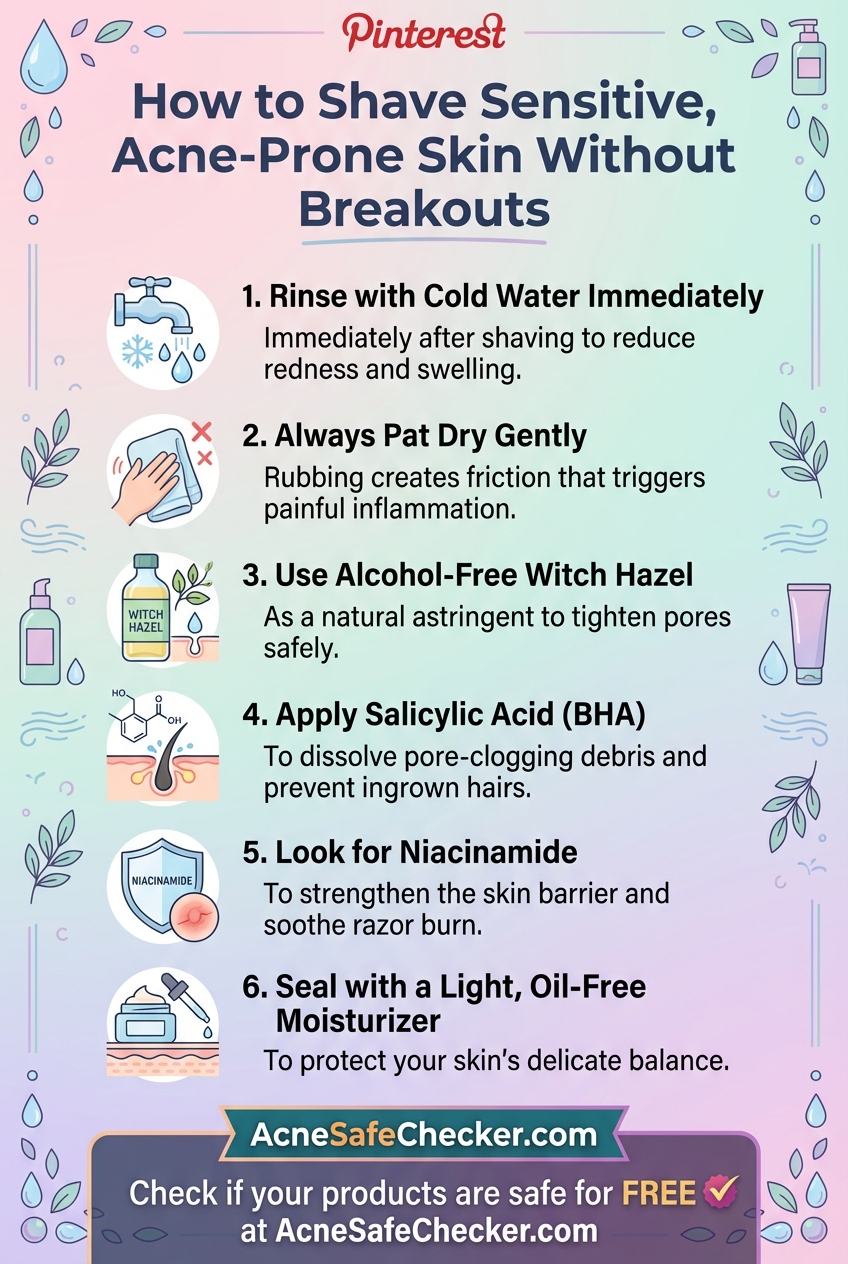
For many, the post-shave ritual is a moment of refreshment. But for those with sensitive, acne-prone skin, it often feels like a gamble. Will this product soothe the razor burn, or will it trigger a painful flare-up of whiteheads and inflammation?
Is Your Routine Acne-Safe?
Do not guess. Instantly check your products for pore-clogging ingredients with our AI-powered tool.
Check Ingredients NowShaving is, by nature, a form of physical exfoliation. While it removes dead skin cells, it also creates micro-traumas in the skin barrier. When you apply the wrong aftershave—one packed with drying alcohols or pore-clogging oils—you create the perfect storm for irritation and breakouts. As a dermatologist, I see patients daily who mistake post-shave irritation for acne, or worse, use products that exacerbate both.
In this guide, we will break down the science of post-shave care and how to select an aftershave that respects your skin’s delicate balance.
Why Traditional Aftershaves Can Be Your Skin’s Enemy
Historically, aftershaves were designed as antiseptics to prevent infection from nicks and cuts. This meant they were primarily composed of high concentrations of denatured alcohol (isopropyl alcohol or SD alcohol).
For acne-prone skin, alcohol is a double-edged sword. While it kills bacteria, it also strips the skin of its natural lipids. This leads to "rebound oiliness," where the skin overproduces sebum to compensate for the dryness, eventually clogging pores. Furthermore, alcohol compromises the stratum corneum (the skin’s outermost layer), making it easier for acne-causing bacteria like Cutibacterium acnes to penetrate and cause inflammation.
The Science of Shaving and Acne: Folliculitis vs. Acne Vulgaris
It is important to distinguish between true acne and Folliculitis barbae (razor bumps).
- Acne Vulgaris: Caused by excess sebum, dead skin cells, and bacteria trapping a pore.
- Folliculitis Barbae: Occurs when hair curves back and grows into the skin, or when bacteria infect the hair follicle after shaving.
For those with sensitive skin, these two conditions often coexist. A proper aftershave must address both by being non-comedogenic (not clogging pores) and anti-inflammatory to soothe the follicle.
Key Ingredients to Look For
When shopping for an aftershave, look for active ingredients that provide therapeutic benefits without heavy residues:
1. Salicylic Acid (BHA)
A gold standard for acne-prone skin. Salicylic acid is oil-soluble, meaning it can penetrate deep into the pores to dissolve the "glue" holding dead skin cells together. In an aftershave, a low concentration (0.5% to 1%) can help prevent both ingrown hairs and acne lesions.
2. Niacinamide (Vitamin B3)
This is a powerhouse for sensitive skin. Niacinamide strengthens the skin barrier, reduces redness, and regulates oil production. It is highly effective at calming the irritation that follows a close shave.
3. Aloe Vera and Witch Hazel (Alcohol-Free)
Aloe vera provides immediate cooling relief to razor burn. Witch hazel acts as a natural astringent, tightening the pores and reducing inflammation—just ensure the formula is labeled "alcohol-free" to avoid the drying effects of traditional distillations.
4. Hyaluronic Acid and Glycerin
Instead of heavy oils, look for humectants. These ingredients pull moisture into the skin without adding grease, keeping the skin hydrated and the barrier intact.
Ingredients to Avoid (The "Red List")
If you are prone to breakouts, check your labels for these common culprits:
- Synthetic Fragrances: Often the #1 cause of contact dermatitis and irritation post-shave.
- Coconut Oil (Cocos Nucifera): Highly comedogenic; it sits on the surface and almost guarantees a breakout for acne-prone individuals.
- Isopropyl Myristate: An emollient that provides a smooth feel but is notorious for clogging pores.
- High-Drying Alcohols: Look for "Alcohol Denat," "Ethanol," or "Isopropyl Alcohol" at the top of the ingredient list and avoid them.
Practical Steps: The Ideal Post-Shave Routine
To manage sensitive, acne-prone skin, your aftershave application should be part of a structured routine:
- The Cold Rinse: Immediately after shaving, rinse your face with cold water. This helps constrict blood vessels and reduce immediate swelling.
- Pat Dry: Never rub your face with a towel. Friction creates more irritation. Pat the skin gently until it is damp, not bone-dry.
- Apply the Aftershave: Use a water-based splash or a light gel-based aftershave containing the "look for" ingredients mentioned above. Focus on the areas most prone to breakouts.
- Seal with a Non-Comedogenic Moisturizer: If your aftershave isn't moisturizing enough, apply a light, oil-free moisturizer. This seals in the active ingredients and protects the barrier from environmental pollutants.
Conclusion
Choosing an aftershave for sensitive, acne-prone skin doesn't have to be a trial-and-error nightmare. By shifting your focus from old-school, alcohol-heavy splashes to modern, dermatologically-sound formulations, you can soothe your skin and keep your complexion clear. Remember: the goal of an aftershave is to heal the skin, not to punish it. Look for ingredients that hydrate, calm, and gently exfoliate, and your skin will thank you with every shave.