
For many, the act of shaving is a necessary part of a grooming routine. However, for those with acne-prone or sensitive skin, it can feel like a high-stakes gamble. You finish your shave looking smooth, only to wake up forty-eight hours later with a fresh crop of whiteheads or painful red bumps.
Is Your Routine Acne-Safe?
Do not guess. Instantly check your products for pore-clogging ingredients with our AI-powered tool.
Check Ingredients NowWhile many assume these breakouts are solely due to dull blades or poor technique, the culprit is often hiding in plain sight: your shaving cream. If your products contain comedogenic (pore-clogging) ingredients, you are essentially massaging a recipe for congestion directly into your follicles. As a dermatologist, I see this frequently. The good news is that by understanding the science of your skin and the labels on your products, you can achieve a close shave without the subsequent breakout.
Why Most Shaving Creams Clog Pores
The primary function of a shaving cream is to provide lubrication (slip) and to soften the hair follicle. To achieve this, many traditional formulas rely on heavy oils, thick waxes, and synthetic esters. While these ingredients make the razor glide effortlessly, they can be disastrous for individuals with a high sebum production rate or narrow pores.
When a product is "comedogenic," it means its molecular structure or chemical properties encourage the formation of a comedone—the clinical term for a clogged pore. During the shaving process, the razor slightly exfoliates the top layer of skin. This opens up the possibility for thick, occlusive creams to settle deeply into the pores. Once trapped, these ingredients mix with dead skin cells and natural sebum, creating a plug that feeds acne-causing bacteria.
Ingredients to Avoid (The Red Flags)
If you struggle with congestion, you must become a conscious consumer. Many products labeled "for sensitive skin" still contain ingredients that can trigger acne. Here are the top offenders to watch out for on the ingredient list:
1. Isopropyl Myristate and Its Derivatives
This is a common emollient used to give products a slick, luxurious feel. However, it is highly comedogenic. It can penetrate the pores and cause significant irritation and blockage.
2. Coconut Oil (Cocos Nucifera Oil)
While praised in the wellness community, coconut oil is a high-ranking comedogen. It is a thick, occlusive fat that is far too heavy for the delicate facial skin of someone prone to breakouts.
3. Sodium Lauryl Sulfate (SLS)
Often used to create that iconic rich lather, SLS is a known irritant. It can strip the skin’s natural moisture barrier, leading to compensatory oil production which eventually clogs pores.
4. Synthetic Fragrances and Dyes
While not always directly pore-clogging, these are common culprits for contact dermatitis. Inflammation from an allergic reaction can cause the pore lining to swell, effectively trapping debris inside.
The Non-Comedogenic Gold Standard: What to Look For
When searching for a shaving cream that doesn't clog pores, you want a formula that prioritizes hydration over heavy occlusion. Look for the following "hero" ingredients:
- Glycerin: A humectant that draws moisture into the skin without adding oil. It provides excellent slip for the razor while remaining water-soluble.
- Aloe Vera: This plant extract is anti-inflammatory and soothing. It helps calm the skin during the micro-trauma of shaving.
- Hyaluronic Acid: This helps the skin retain moisture during the shave, ensuring the barrier remains intact.
- Colloidal Oatmeal: Excellent for those who experience redness or "razor burn" alongside acne.
- Salicylic Acid (BHA): Some specialized shaving gels include a small percentage of BHA. This is a game-changer for acne-prone skin as it chemically exfoliates inside the pore while you shave.
The Difference Between Cream, Gel, and Foam
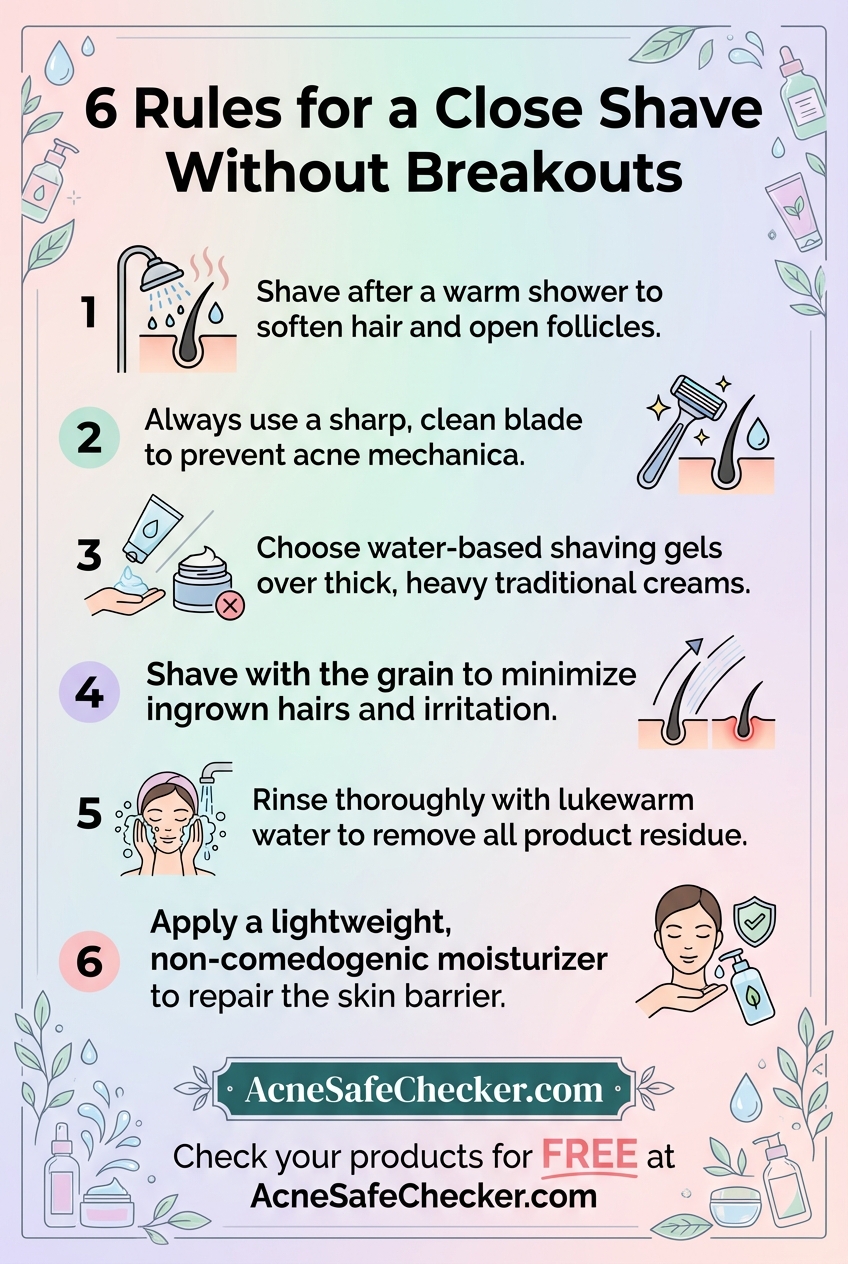
Texture matters. For those prone to clogged pores, shaving gels are generally superior to traditional thick creams or aerosol foams.
Traditional creams often use fatty acids (like stearic or palmitic acid) in high concentrations to create their texture. Aerosol foams often contain drying alcohols or gases that can irritate the skin. Gels, particularly those that are translucent, tend to be water-based and formulated with lightweight polymers that provide glide without the heavy, oily residue.
A Dermatologist’s Guide to a Breakout-Free Shave
Choosing the right product is half the battle; the other half is technique. Follow these steps to minimize the risk of pore congestion:
- Preparation is Key: Never shave dry skin. Shaving after a warm shower softens the hair and opens the follicles, allowing for a cleaner cut with less pressure.
- Use a Clean, Sharp Blade: A dull blade tugs at the hair and scrapes the skin, causing inflammation that leads to "acne mechanica."
- Shave With the Grain: Shaving against the grain might give a closer feel, but it significantly increases the risk of ingrown hairs and follicular irritation.
- Rinse Thoroughly: This is the most crucial step. Use lukewarm water to ensure every trace of shaving gel is removed from the skin. Any residue left behind is a potential pore-clogger.
- Post-Shave Care: Avoid alcohol-based aftershaves. Instead, use a lightweight, non-comedogenic moisturizer or a soothing serum containing niacinamide to help repair the skin barrier.
Conclusion
You do not have to choose between a clean shave and clear skin. By transitioning to a non-comedogenic shaving formula and avoiding heavy oils and synthetic irritants, you can maintain your grooming routine without the fear of a breakout. Remember, the best shaving cream isn't the one that lathers the most—it’s the one that respects your skin’s biological need to breathe.