
For anyone who has navigated the frustrating cycle of breakouts and clear skin, reading an ingredient label can feel like walking through a minefield. You want the therapeutic benefits of natural botanicals, but the fear of a "purge" or a cluster of new blackheads often holds you back.
Is Your Routine Acne-Safe?
Do not guess. Instantly check your products for pore-clogging ingredients with our AI-powered tool.
Check Ingredients NowSandalwood oil, known for its warm, woody aroma and centuries of use in Ayurvedic medicine, is frequently found in high-end serums and moisturizers. But the burning question for the acne-prone individual remains: Is sandalwood oil comedogenic?
As a dermatologist, I see many patients struggle to differentiate between "natural" and "acne-safe." In this guide, we will break down the science of sandalwood oil, its rating on the comedogenic scale, and how to safely incorporate it into your routine.
Understanding the Comedogenic Scale
Before we look specifically at sandalwood, it’s important to understand the tool we use to measure pore-clogging potential: the Comedogenic Scale. This scale ranges from 0 to 5:
- 0: Will not clog pores
- 1: Very low probability of clogging pores
- 2: Moderately low (Safe for most, but may affect highly sensitive skin)
- 3: Moderate (Likely to cause breakouts in acne-prone individuals)
- 4: Fairly high (Most people will experience some clogging)
- 5: Highly comedogenic (Almost certain to cause blackheads and whiteheads)
The Verdict: Is Sandalwood Oil Comedogenic?
Sandalwood essential oil typically holds a comedogenic rating of 2.
This means that for the vast majority of people—even those with oily or combination skin—sandalwood oil is unlikely to clog pores. In dermatology terms, it is considered "non-comedogenic" in a practical sense, provided it is used correctly.
However, there is a nuance here that many skincare guides miss: the distinction between an essential oil and a carrier oil.
Essential Oil vs. Carrier Oil
Sandalwood is an essential oil, meaning it is highly concentrated and distilled. Unlike carrier oils (like coconut oil or cocoa butter, which are heavy in fatty acids), sandalwood oil consists of volatile aromatic compounds—primarily alpha-santalol and beta-santalol. These compounds do not have the heavy, "sticky" molecular structure that typically plugs a sebaceous gland.
The Benefits of Sandalwood for Acne-Prone Skin
Surprisingly, sandalwood oil is often used to treat the very conditions people fear it might cause. Because of its unique chemical profile, it offers several benefits for those struggling with blemishes:
1. Anti-Inflammatory Properties
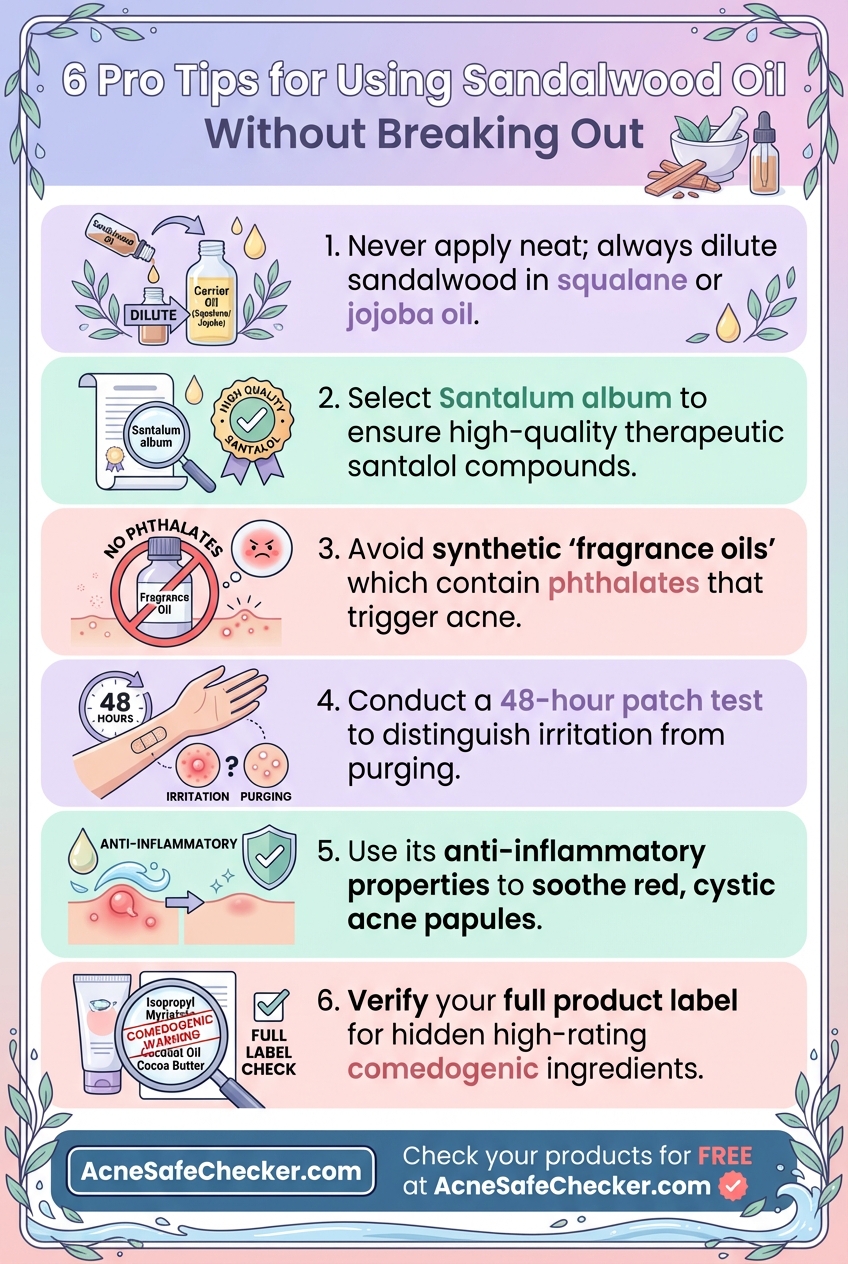
The santalols in sandalwood are potent anti-inflammatory agents. If you have cystic acne or red, angry papules, sandalwood can help soothe the skin and reduce the visible swelling and redness.
2. Antimicrobial Activity
Research suggests that sandalwood oil possesses mild antimicrobial properties. While it isn’t as aggressive as benzoyl peroxide, it can help inhibit the growth of Cutibacterium acnes, the bacteria primarily responsible for acne flare-ups.
3. Astringent Qualities
Sandalwood acts as a mild natural astringent. It helps to tone the skin and can contribute to a reduction in excess sebum (oil) production, which is a root cause of comedone formation.
Potential Risks: Irritation vs. Clogging
While sandalwood oil is low on the comedogenic scale, it is not risk-free. It is crucial to distinguish between a comedogenic reaction (clogged pores) and an irritant reaction (contact dermatitis).
Essential oils are powerful. If applied undiluted (neat), sandalwood oil can cause redness, itching, or tiny bumps that look like acne but are actually a sign of irritation. For those with extremely sensitive skin or a fragrance allergy, the natural components of the oil can trigger a localized immune response.
How to Use Sandalwood Oil Safely
If you want to enjoy the benefits of sandalwood without risking a breakout, follow these professional recommendations:
1. Always Dilute
Never apply pure sandalwood essential oil directly to your face. It should be diluted in a non-comedogenic carrier oil. I recommend squalane oil (rating 0-1) or jojoba oil (rating 2) for acne-prone patients.
2. Look for the Scientific Name
Ensure you are buying high-quality oil. Look for Santalum album (East Indian Sandalwood) or Santalum spicatum (Australian Sandalwood). Avoid "fragrance oils" labeled as sandalwood, as these are synthetic and often contain phthalates and heavy carriers that will clog your pores.
3. The Patch Test
Before applying any new product to your entire face, apply a small amount to the inside of your forearm or behind your ear. Wait 24 to 48 hours to ensure no redness or irritation develops.
4. Check the Full Ingredient List
If you are buying a pre-made sandalwood serum, the sandalwood oil isn't the only thing to worry about. Check the label for other high-ranking comedogenic ingredients like isopropyl myristate or algae extract, which are often the true culprits behind a product-induced breakout.
Conclusion
So, is sandalwood oil comedogenic? With a rating of 2, it is a low-risk ingredient for most people. Its ability to calm inflammation and fight bacteria actually makes it a hidden gem for adult acne and sensitive skin types.
As with any botanical ingredient, the key lies in the quality of the source and the method of application. By diluting it properly and choosing high-grade Santalum album, you can enjoy the therapeutic properties of this ancient wood without compromising the clarity of your skin. If you experience persistent breakouts, always consult with a board-certified dermatologist to create a customized plan for your unique skin chemistry.