
For many, the relationship with makeup is a double-edged sword. You use it to cover the very breakouts that the makeup itself might be causing. This frustrating phenomenon is known in the dermatological world as acne cosmetica. As a dermatologist, I see patients every day who are doing everything right with their prescriptions, only to have their progress hindered by a pore-clogging foundation or a heavy concealer.
Is Your Routine Acne-Safe?
Do not guess. Instantly check your products for pore-clogging ingredients with our AI-powered tool.
Check Ingredients NowFinding "acne-safe" makeup is about more than just looking for a label that says "oil-free." It requires a deeper understanding of ingredient lists and how certain formulations interact with your sebaceous glands. This guide will help you navigate the aisles and choose brands that respect your skin's health.
The Science of Comedogenesis
To understand acne-safe makeup, we must understand the concept of comedogenicity. A "comedo" is the clinical term for a clogged pore (a blackhead or whitehead). Ingredients are often rated on a scale from 0 to 5 based on their likelihood of clogging pores.
When a product is labeled "non-comedogenic," it generally means it has been formulated without ingredients known to trigger these blockages. However, it is important to note that the FDA does not strictly regulate this term. This is why looking at the specific ingredient deck is more reliable than trusting marketing claims alone. For those with acne-prone skin, we want to avoid "occlusives" that create a plastic-like film over the skin, trapping bacteria and sebum underneath.
Red Flag Ingredients to Avoid
Before we dive into the brands, keep an eye out for these common offenders often found in traditional cosmetics:
1. Isopropyl Myristate and its Derivatives
While it gives makeup a smooth application, this ingredient is highly comedogenic and can penetrate the pores deeply, leading to irritation and breakouts.
2. D&C Red Dyes
Commonly found in blushes and bronzers, certain red dyes (like Red X) are coal tar derivatives that are notoriously pore-clogging.
3. Coconut Oil (Cocos Nucifera Oil)
While excellent for body hydration, coconut oil is a level 4 on the comedogenic scale. It is too heavy for facial skin that is prone to acne.
4. Bismuth Oxychloride
Often found in mineral makeup to provide a shimmery finish, this mineral can cause significant itching and cystic flare-ups in sensitive individuals.
Top Dermatologist-Recommended Acne-Safe Brands
Through clinical observation and ingredient analysis, several brands have stood out for their commitment to skin-safe formulations.
BareMinerals
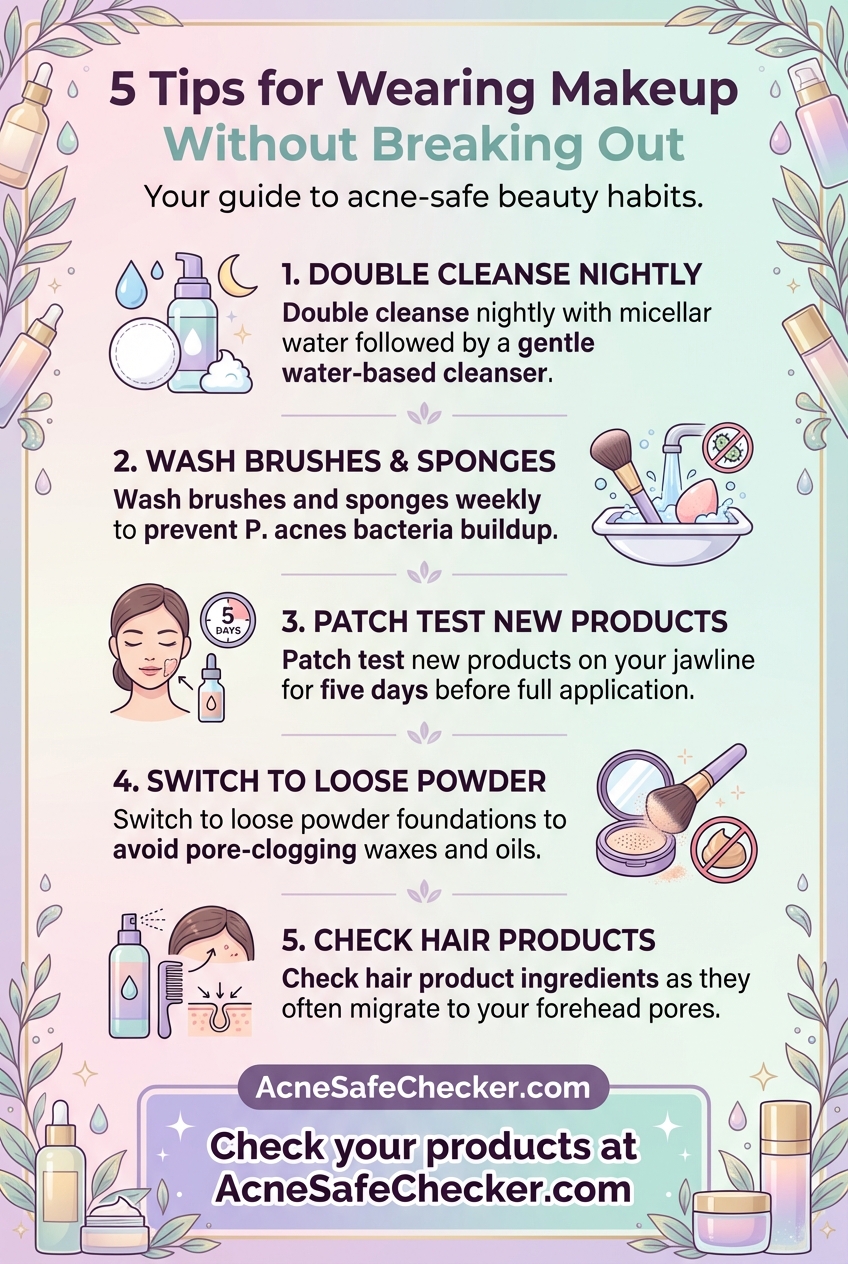
BareMinerals is a pioneer in the "clean" space. Their Original Loose Powder Foundation is a gold standard for acne sufferers because it contains only five mineral ingredients. Since it is a powder, it lacks the waxes and oils found in liquid foundations that often cause issues. Furthermore, the zinc oxide in their formula provides a natural anti-inflammatory effect, helping to soothe active redness.
Tower 28 Beauty
Tower 28 has gained a cult following because they follow the National Eczema Association’s guidelines, meaning their products are free of known irritants. Their SunnyDays SPF 30 Tinted Moisturizer is unique because it is the first complexion product with the NEA Seal of Acceptance. It’s fragrance-free, alcohol-free, and formulated without any known pore-cloggers, making it a safe haven for reactive skin.
Clinique
Clinique has long maintained a reputation for being "Dermatologist Developed." Their Anti-Blemish Solutions line is specifically formulated for acne-prone skin. Many of their foundations contain salicylic acid, a beta-hydroxy acid (BHA) that works to exfoliate the inside of the pore while you wear your makeup. This makes it a proactive choice for those dealing with active congestion.
Neutrogena
For a high-quality drugstore option, Neutrogena’s SkinClearing line is a reliable choice. Like Clinique, they often incorporate salicylic acid. Their formulations are rigorously tested to ensure they are non-comedogenic and oil-free, making them accessible and effective for teenagers and adults alike.
Jane Iredale
Often referred to as "The Skin Care Makeup," Jane Iredale is frequently sold in dermatology offices. Their products are non-comedogenic and formulated to allow the skin to breathe. Their Glow Time Pro BB Cream provides full coverage without the heavy, suffocating feel of traditional high-coverage foundations.
Practical Steps for an Acne-Safe Routine
Even with the best products, how you apply and remove your makeup matters just as much as the brand you choose.
- The Double Cleanse: At the end of the day, use a micellar water or a gentle non-comedogenic oil cleanser followed by a water-based cleanser. This ensures no pigment particles are left behind to sit in your pores overnight.
- Wash Your Tools: Brushes and sponges are breeding grounds for P. acnes bacteria. Wash your tools at least once a week with a gentle, fragrance-free soap.
- Check Every Product: Don't stop at foundation. Primers, concealers, and even hair products (which can migrate to the forehead) should be checked for comedogenic ingredients.
- Patch Test: Whenever you try a new brand, patch test it on a small area of your jawline for 3-5 days to monitor for any delayed inflammatory responses.
Conclusion
Managing acne doesn't mean you have to forgo the confidence that makeup can provide. By shifting your focus toward brands like BareMinerals, Clinique, and Tower 28—and by becoming a savvy reader of ingredient labels—you can enjoy a flawless finish without compromising your skin's long-term health. Remember, the goal is to work with your skin, not against it. If your breakouts persist despite changing your makeup, consult with a board-certified dermatologist to tailor a medical treatment plan that works for you.