
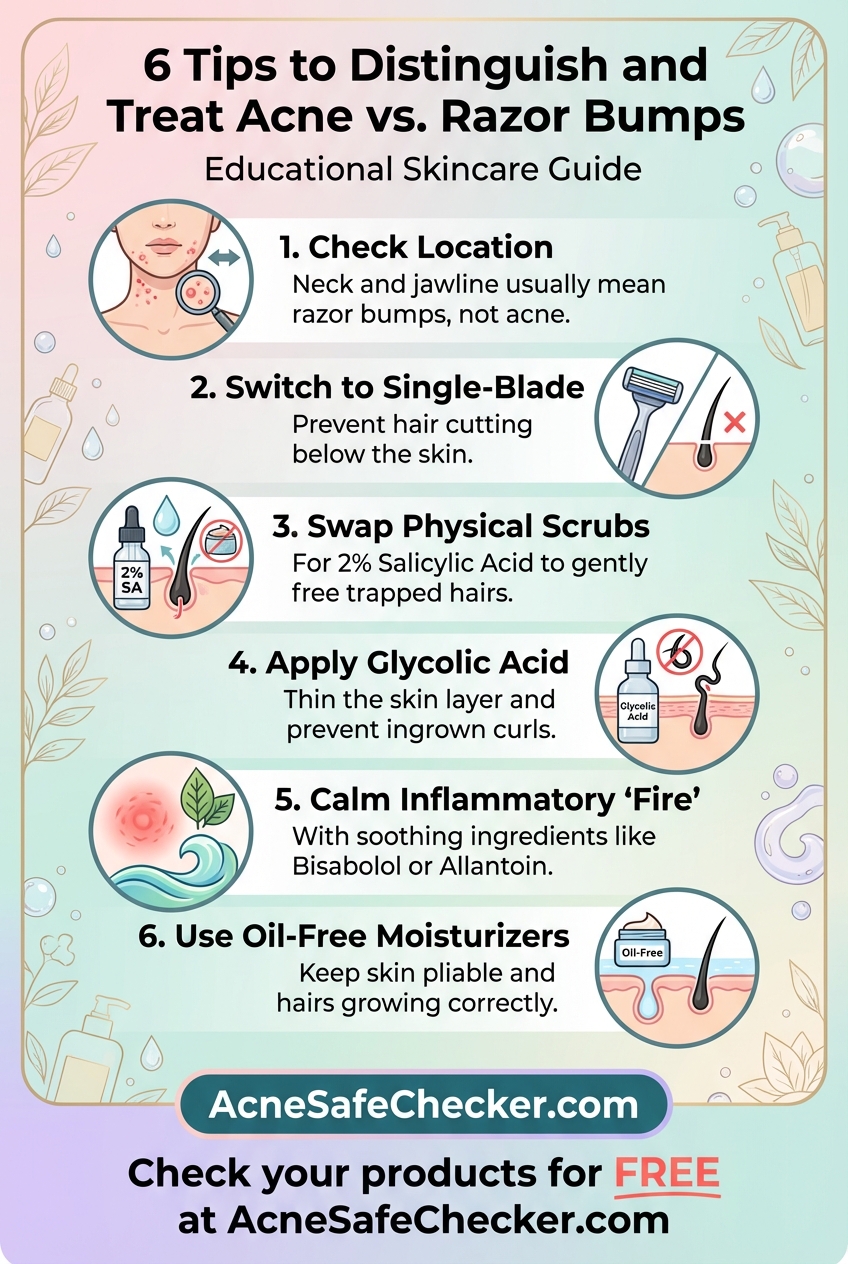
Waking up to a cluster of red, inflamed bumps on your face or neck can be a frustrating start to the day. For many, the immediate reaction is to reach for a heavy-duty acne cream. However, what looks like a typical breakout might actually be pseudofolliculitis barbae—more commonly known as razor bumps.
Is Your Routine Acne-Safe?
Do not guess. Instantly check your products for pore-clogging ingredients with our AI-powered tool.
Check Ingredients NowTreating razor bumps with the wrong ingredients won’t just be ineffective; it could lead to further irritation, scarring, and long-term skin damage. As a dermatologist, I see patients daily who confuse these two conditions. Understanding the biochemical and structural differences between them is the first step toward a clear complexion.
The Core Difference: Biology vs. Mechanics
To choose the right ingredients, you must first understand what is happening beneath the skin’s surface.
What is Acne? (Acne Vulgaris)
Acne is a multi-factorial inflammatory condition of the pilosebaceous unit (the pore and its associated oil gland). It occurs when excess sebum (oil) and dead skin cells create a plug, known as a comedone. This oxygen-poor environment allows the bacteria Cutibacterium acnes to flourish, leading to the redness and pus associated with traditional pimples.
What are Razor Bumps? (Pseudofolliculitis Barbae)
Razor bumps are not a result of oil or bacteria; they are a foreign-body inflammatory response. When hair is cut too short or at an angle, it can curl back and re-enter the skin (extrafollicular) or fail to exit the follicle entirely (intrafollicular). The body treats this trapped hair as an invader, triggering localized inflammation, swelling, and sometimes secondary infection.
Key Ingredients for Razor Bumps
When treating razor bumps, the goal is to gently exfoliate the skin to "free" the trapped hair and soothe the surrounding inflammation.
1. Salicylic Acid (BHA)
Salicylic acid is a gold-standard ingredient for both conditions, but for different reasons. For razor bumps, its oil-soluble nature allows it to penetrate the follicle and dissolve the "glue" holding dead skin cells together, making it easier for the hair to break through the surface.
2. Glycolic Acid (AHA)
Glycolic acid works on the skin's surface to thin the top layer of dead skin. By keeping this layer thin and pliable, you reduce the mechanical barrier that causes hairs to curl back inward.
3. Allantoin and Bisabolol
Because razor bumps are fundamentally an inflammatory reaction, soothing agents are critical. These ingredients help reduce the "fire" in the skin and minimize the urge to pick, which prevents post-inflammatory hyperpigmentation (dark spots).
Key Ingredients for Acne
Acne treatments focus on controlling oil, killing bacteria, and regulating cell turnover.
1. Benzoyl Peroxide
This is a powerful antimicrobial agent. It introduces oxygen into the pore, killing C. acnes bacteria. While effective for acne, it can be overly drying for someone dealing solely with razor bumps, potentially making the skin more brittle and prone to ingrowns.
2. Retinoids (Adapalene, Tretinoin)
Retinoids are derivatives of Vitamin A that communicate with skin cells to behave normally. They prevent the initial clog from forming. While they can help razor bumps over time by thinning the stratum corneum, they are primarily used to manage the lifecycle of acne.
3. Niacinamide
This form of Vitamin B3 is excellent for acne because it regulates sebum production and strengthens the skin barrier. For acne sufferers, it helps prevent the "oil slick" that leads to new clogs.
Ingredients to Avoid: The "Pore-Cloggers"
Regardless of whether you have acne or razor bumps, certain ingredients can exacerbate both by causing "Comedogenicity" (pore-clogging) or "Acne Estivalis" (irritation-induced bumps).
- Coconut Oil: While marketed as a natural wonder, it is highly comedogenic and frequently causes massive breakouts in acne-prone individuals.
- Isopropyl Myristate: Often found in aftershaves and creams to give them a "slick" feel, this ingredient is a known pore-clogger.
- High-Fragrance Aftershaves: Alcohol-based, highly scented products can dry out the skin, causing it to harden. Hard skin is the primary enemy of a hair trying to exit the follicle, leading directly to more razor bumps.
Practical Advice: How to Manage Both
If you find yourself struggling with a mix of both, or you aren't sure which you have, follow this dermatological protocol:
- Identify the Location: If the bumps are strictly where you shave (neck, jawline, bikini area), they are likely razor bumps. If they appear on the forehead, nose, or back, it is likely acne.
- The "Single-Blade" Rule: If you suspect razor bumps, switch to a single-blade razor. Multi-blade razors are designed to pull the hair and cut it below the skin line—a primary cause of ingrowns.
- Chemical over Physical: Avoid harsh scrubs. Use a chemical exfoliant with 2% Salicylic Acid. This treats the bacterial component of acne while clearing the path for hairs to grow correctly.
- Hydration is Key: Use a non-comedogenic (oil-free) moisturizer. Dehydrated skin is less elastic, making it easier for hairs to get trapped and for oil to become concentrated in the pores.
Conclusion
Distinguishing between razor bumps and acne is essential for maintaining skin health. While acne requires a focus on bacterial control and oil regulation, razor bumps require mechanical management and surface exfoliation. By choosing products with Salicylic Acid to bridge the gap and avoiding heavy, comedogenic oils, you can calm inflammation and achieve the smooth skin you deserve. When in doubt, always consult with a board-certified dermatologist to create a tailored plan for your unique skin type.