
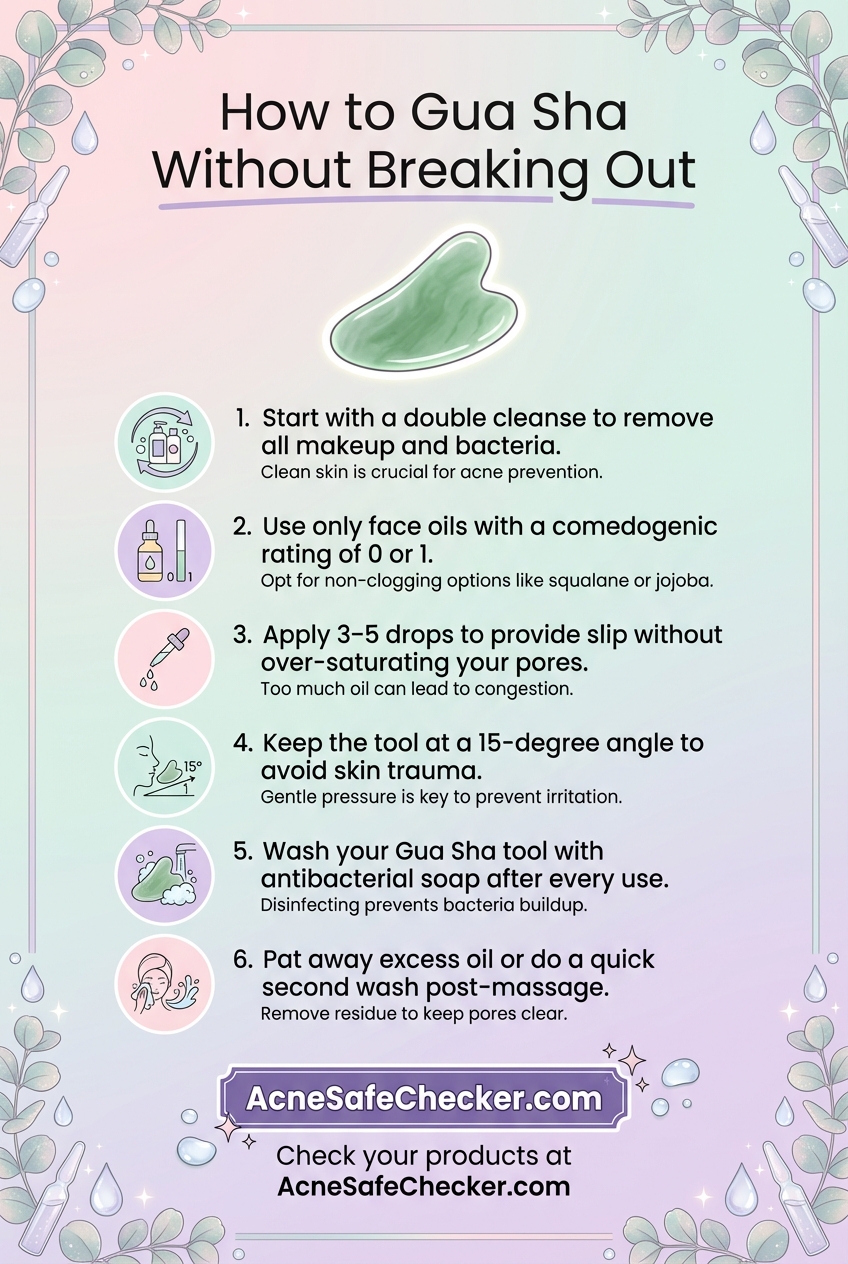
For many, the ancient practice of Gua Sha has become a non-negotiable ritual for facial sculpting, lymphatic drainage, and stress relief. However, for those with acne-prone or sensitive skin, the prospect of applying a heavy layer of facial oil—a requirement for the tool to 'slip'—can be a source of significant anxiety. The fear of waking up with a cluster of new breakouts often outweighs the desire for a snatched jawline.
Is Your Routine Acne-Safe?
Do not guess. Instantly check your products for pore-clogging ingredients with our AI-powered tool.
Check Ingredients NowAs a dermatologist, I frequently see patients who have inadvertently compromised their skin barrier or triggered a flare-up by using the wrong lubricant for their facial massage. The good news? You do not have to choose between clear skin and a lifted appearance. By understanding the science of comedogenicity and selecting the right fatty acid profiles, you can enjoy all the benefits of Gua Sha without the congestion.
Understanding the Comedogenic Scale
To navigate the world of facial oils, we first look at the comedogenic scale. This is a ranking from 0 to 5 that indicates how likely a specific ingredient is to clog pores:
- 0: Will not clog pores
- 1: Very low probability of clogging pores
- 2: Moderately low (may be fine for most, but risky for very oily skin)
- 3-5: High probability of clogging pores (oils like coconut oil fall here)
For Gua Sha, especially if you are prone to acne, you should strictly stick to oils rated 0 or 1.
The Science of Sebum: Linoleic vs. Oleic Acid
Why do some oils cause breakouts while others seem to heal them? The answer lies in the ratio of fatty acids.
Research suggests that individuals with acne-prone skin often have a deficiency of linoleic acid (an omega-6 fatty acid) in their surface skin lipids. When linoleic acid is low, the skin’s sebum becomes thick and sticky, leading to clogged pores. Oils high in linoleic acid help thin out the sebum, making it less likely to cause a blockage.
Conversely, oils high in oleic acid (omega-9) are richer and more occlusive. While wonderful for extremely dry or mature skin, they can be disastrous for someone already struggling with congestion.
Top Non-Comedogenic Oils for Your Gua Sha Practice
1. Squalane Oil (Comedogenic Rating: 0-1)
Squalane is arguably the "gold standard" for acne-prone Gua Sha. It is a stable version of squalene, a lipid naturally produced by our own skin cells. Because it mimics our natural sebum, it is incredibly lightweight, non-greasy, and highly unlikely to cause a reaction. It provides a silky slip that is perfect for the repetitive strokes of a stone tool.
2. Hemp Seed Oil (Comedogenic Rating: 0)
Not to be confused with CBD oil, cold-pressed hemp seed oil is a powerhouse for inflamed skin. It has a high concentration of linoleic acid and is known for its anti-inflammatory properties. If your skin is currently red or irritated, hemp seed oil can help calm the surface while providing the necessary glide.
3. Argan Oil (Comedogenic Rating: 0)
Often called "liquid gold," pure argan oil is surprisingly non-comedogenic despite its luxurious feel. It is rich in Vitamin E and antioxidants, making it an excellent choice for those who want to address both aging concerns and acne prevention simultaneously.
4. Rosehip Seed Oil (Comedogenic Rating: 1)
Rosehip oil is a favorite in the dermatology community for its high Vitamin A (natural retinol) content. It aids in cell turnover and can help fade post-inflammatory hyperpigmentation (acne scars). While it has a slightly "drier" feel than squalane, it offers sufficient slip for a gentle Gua Sha session.
How to Perform Gua Sha Without Breaking Out: Practical Steps
Selecting the right oil is only half the battle. To ensure your skin remains clear, follow these professional guidelines:
Step 1: The Double Cleanse
Never perform Gua Sha on a face that hasn't been thoroughly cleansed. You don't want to massage day-old makeup, sweat, or pollution deeper into your follicles. Use a gentle cleanser to start with a fresh canvas.
Step 2: Apply the Right Amount
Use enough oil to ensure the tool moves without pulling the skin, but don't over-saturate. Usually, 3–5 drops are sufficient for the face and neck. If the tool "drags," add one more drop rather than dousing the face.
Step 3: Technique Matters
Keep the tool at a 15-degree angle (almost flat against the skin). Use light to medium pressure. Aggressive scraping can cause micro-trauma and inflammation, which can trigger a "mechanical acne" response.
Step 4: Clean Your Tool
This is the most common mistake. Gua Sha tools (whether jade, rose quartz, or stainless steel) are porous or can harbor bacteria. Wash your tool with warm water and a gentle antibacterial soap after every single use. Bacteria left on the tool will be massaged directly into your pores during the next session.
Step 5: Post-Massage Care
If your skin feels excessively greasy after your ritual, you can gently pat away the excess oil with a clean tissue, or even do a quick second wash with a very mild cleanser. This ensures that no excess oil sits on the skin for too long if you are highly reactive.
The Bottom Line
Gua Sha is a therapeutic practice that can improve circulation and reduce facial tension, but it shouldn't come at the cost of your complexion. By prioritizing high-linoleic, low-comedogenic oils like Squalane or Hemp Seed oil, and maintaining strict tool hygiene, you can achieve a glowing, sculpted look without the unwanted side effect of breakouts.
If you have active, cystic acne or an inflammatory flare-up (like rosacea), hold off on Gua Sha in those specific areas until the skin has calmed down to avoid further irritation. When in doubt, always perform a patch test with a new oil on your jawline for 48 hours before committing to a full facial massage.