
For many people struggling with persistent breakouts, the morning routine becomes a frustrating cycle: using makeup to hide acne, only for that same makeup to trigger more blemishes. This phenomenon is so common in dermatology that it has its own name: acne cosmetica.
Is Your Routine Acne-Safe?
Do not guess. Instantly check your products for pore-clogging ingredients with our AI-powered tool.
Check Ingredients NowAs a dermatologist, I see patients daily who are doing everything right with their prescriptions but are inadvertently sabotaging their progress with their choice of foundation, primer, or even blush. Understanding how cosmetic ingredients interact with your pores is the first step toward breaking the breakout cycle and achieving a clear, radiant complexion.
Understanding Acne Cosmetica
Acne cosmetica is a specific form of acne induced by the application of topical cosmetic products. Unlike hormonal acne, which typically appears as deep cysts along the jawline, acne cosmetica usually presents as small, itchy bumps, whiteheads, or persistent blackheads on the cheeks, chin, or forehead.
The culprit is usually a high concentration of "comedogenic" ingredients—substances that have a physical or chemical tendency to clog pores. When these ingredients sit on the skin, they mix with natural sebum and dead skin cells to form a "plug" (a microcomedone), which eventually evolves into a visible blemish.
The Science of Pore Clogging (Comedogenicity)
The skin’s surface is home to thousands of pilosebaceous units (pores). These pores serve as the exit point for sebum, the oil that keeps our skin hydrated. When we apply cosmetics containing heavy oils or certain synthetic esters, these substances can penetrate the pore and act like glue, trapping debris inside.
Furthermore, some ingredients don't just clog the pore physically; they irritate the lining of the follicle, leading to rapid skin cell turnover (hyperkeratosis). This excess skin cell production further narrows the pore opening, making a breakout almost inevitable.
Top Cosmetic Triggers to Watch For
While every individual's skin reacts differently, certain ingredients are notorious for their high comedogenic rating. If you are prone to acne, you should scrutinize your labels for the following:
1. Isopropyl Myristate and Its Derivatives
This synthetic ester is used to give cosmetics a smooth, silky feel and to help products penetrate the skin. Unfortunately, it is highly comedogenic. Derivatives like isopropyl palmitate, isostearyl neopentanoate, and myristyl myristate are equally problematic for acne-prone individuals.
2. Coconut Oil (Cocos Nucifera)
Marketed as a "natural" miracle, coconut oil is actually one of the most comedogenic natural oils available. While it is excellent for hair or very dry body skin, it is a significant trigger for facial acne. Even in wash-off products like cleansing balms, it can leave a film that traps bacteria.
3. D&C Red Dyes
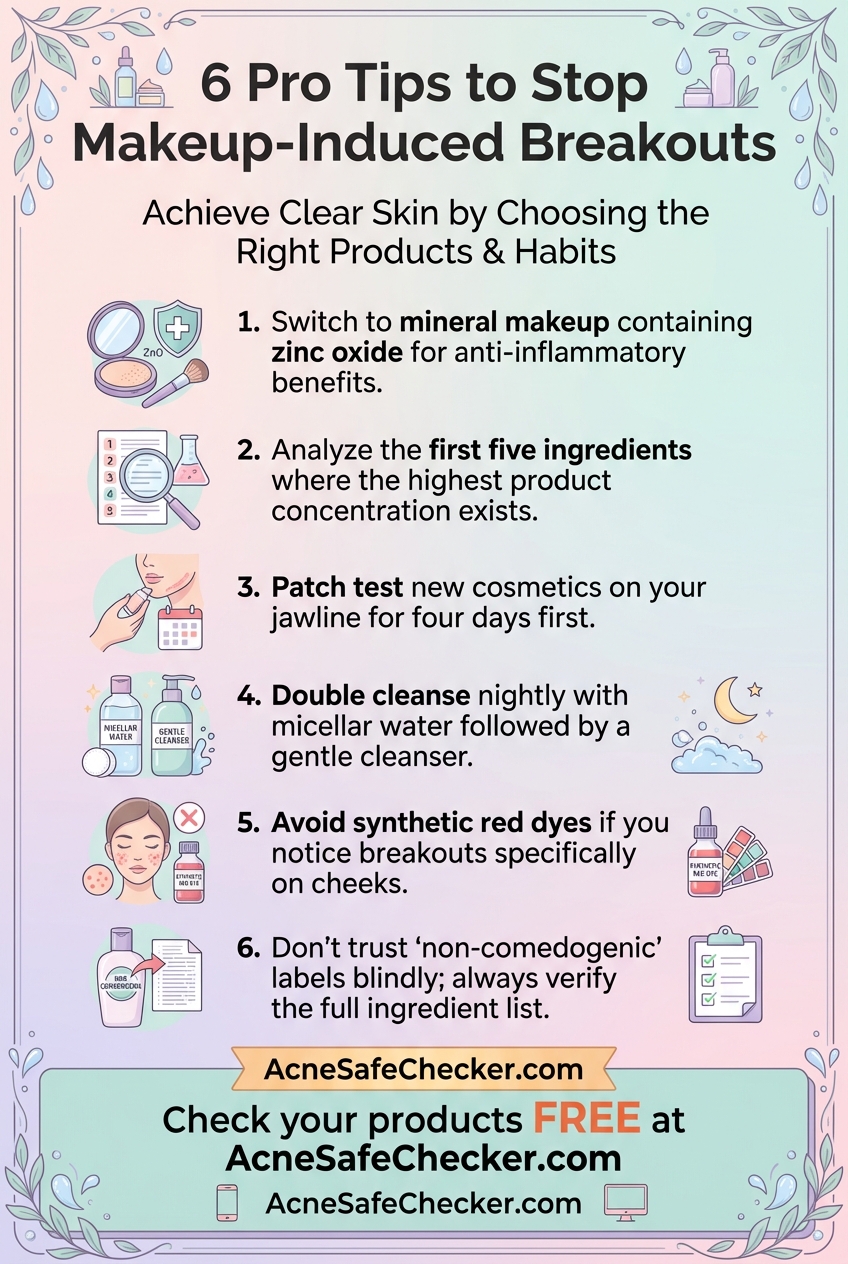
Often found in blushes and lip products, certain synthetic red pigments (derived from coal tar) are known pore-cloggers. Specifically, look out for D&C Red #9, #17, #19, #21, #27, #30, and #40. If you notice breakouts specifically on your cheekbones where you apply blush, your pigment might be the cause.
4. Acetylated Lanolin
Lanolin is a natural wax secreted by the sebaceous glands of sheep. While pure lanolin is deeply hydrating, the chemically altered version—acetylated lanolin—is highly comedogenic and often used to give makeup a creamy consistency.
5. Algae and Seaweed Extracts
Commonly found in high-end "marine-based" cosmetics, ingredients like Laminaria Digitata or Algae Extract are rich in minerals but can be very irritating to the pore lining because of their high iodine content, which can trigger inflammatory acne.
The "Non-Comedogenic" Label: A Word of Caution
You will often see products labeled as "non-comedogenic" or "oil-free." While these are better starting points than products without these labels, it is important to understand that these terms are not strictly regulated by the FDA. A manufacturer can claim a product is non-comedogenic based on their own internal testing, which may not account for how the product reacts with your specific skin chemistry.
Always double-check the ingredient list, especially for the top five ingredients listed, as these comprise the bulk of the product's volume.
Practical Steps for Acne-Safe Beauty
Transitioning to an acne-safe beauty routine doesn't mean giving up makeup entirely. It means being a more informed consumer. Follow these professional tips:
- Switch to Mineral Makeup: High-quality loose mineral powders often contain fewer binders and waxes than liquid foundations. Look for products containing zinc oxide, which also has anti-inflammatory properties.
- The 5-Ingredient Rule: When looking at an ingredient list, pay the most attention to the first five ingredients. If a comedogenic trigger is listed at the very end, it may be present in such a small amount that it won't cause issues.
- Patch Test New Products: Before applying a new foundation all over your face, apply it to a small area near your jawline for three to four days to see if any congestion develops.
- Double Cleanse: Even the safest makeup can cause issues if it isn't properly removed. Use a micellar water followed by a gentle, pH-balanced cleanser to ensure every trace of pigment is gone before bed.
Conclusion
Managing acne requires a holistic approach that goes beyond topical treatments. By identifying and eliminating common cosmetic triggers, you remove a major obstacle in your journey toward clear skin. Remember, your skin is a living organ that needs to breathe. Choose products that respect its delicate balance, and don't be afraid to consult with a board-certified dermatologist to curate a routine that works specifically for your skin type.