
For many men, growing a beard is a rite of passage, a style statement, or a way to enhance facial features. However, that journey often hits a frustrating roadblock: "beardne." If you have noticed an increase in painful bumps, whiteheads, or persistent redness localized under your facial hair, you might be asking yourself, "Is my beard balm the culprit?"
Is Your Routine Acne-Safe?
Do not guess. Instantly check your products for pore-clogging ingredients with our AI-powered tool.
Check Ingredients NowAs a dermatologist, I see this frequently. While beard balm is designed to tame unruly hairs and moisturize the skin, the wrong formulation can wreak havoc on your pores. In this guide, we will explore the scientific link between beard products and acne, and how you can maintain a sharp beard without sacrificing your skin health.
Understanding Acne Cosmetica: The Product-Acne Connection
When a skincare or grooming product causes a breakout, we call it acne cosmetica. This is a form of acne triggered by the topical application of substances that irritate the hair follicle or physically block the pore.
Beard balm is essentially a hybrid of a leave-in conditioner and a styling wax. It typically contains a mixture of carrier oils, essential oils, and a thickening agent like beeswax or shea butter. While these ingredients are excellent for the hair shaft, they are not always friendly to the sebaceous glands on your chin and jawline.
The Science of Clogged Pores (Comedogenicity)
The primary reason a beard balm causes chin acne is its comedogenicity. This refers to the likelihood that a specific ingredient will clog pores. In dermatology, we use a scale from 0 to 5 to rate ingredients, with 0 being non-comedogenic and 5 being highly likely to cause breakouts.
The Common Culprits
Many commercial beard balms rely on heavy, occlusive ingredients that sit on top of the skin.
- Coconut Oil: While popular in natural grooming, coconut oil has a comedogenic rating of 4. It is highly likely to clog pores for those with oily or combination skin.
- Cocoa Butter: This is another heavy occlusive that can trap sebum and bacteria within the follicle.
- Synthetic Fragrances: These can cause contact dermatitis or irritation, which weakens the skin barrier and makes it more susceptible to acne-causing bacteria (Cutibacterium acnes).
The "Occlusive Trap"
Beard balm doesn't just provide nutrients; it creates a physical barrier on the skin. This is known as an occlusive effect. While this is great for locking in moisture in dry environments, it also traps sweat, heat, and dead skin cells against the skin's surface.
When you combine a thick layer of wax with the natural oils your skin produces (sebum), you create the perfect breeding ground for bacteria. Since the chin area is naturally dense with oil glands, this "occlusive trap" often leads to deep, painful cystic acne or clusters of pustules.
How to Tell if Your Balm is the Problem
If you aren't sure if your balm is the cause, look for these signs:
- Localization: The acne is strictly confined to the areas where you apply the balm.
- Timing: Breakouts flared up within 2–4 weeks of starting a new product.
- Texture: You notice small, flesh-colored bumps (closed comedones) that eventually turn into inflamed pimples.
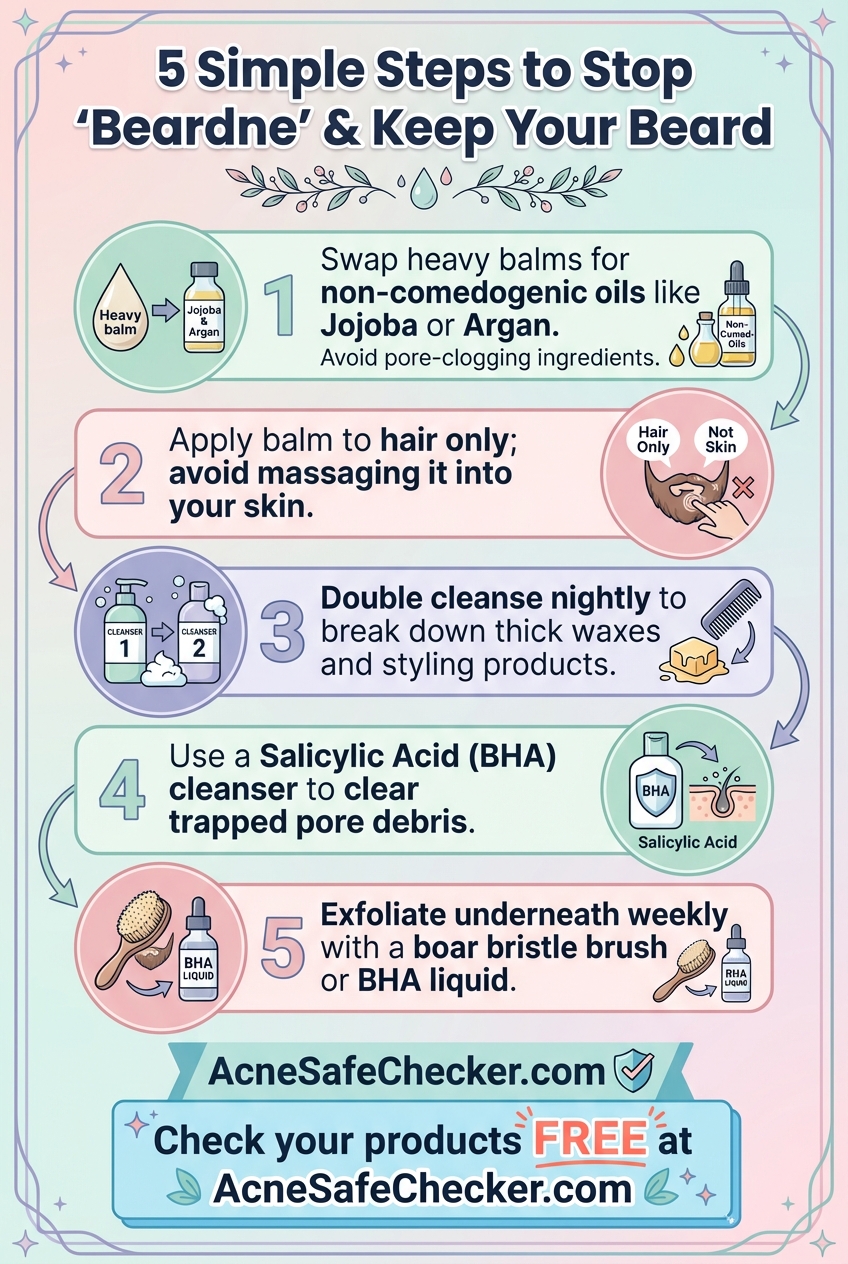
5 Steps to Prevent "Beardne" and Keep Using Products
You don’t necessarily have to choose between a dry, itchy beard and clear skin. By refining your routine and ingredient selection, you can have both.
1. Look for Non-Comedogenic Ingredients
When shopping for a balm, prioritize products that use oils with a low comedogenic rating. Jojoba oil is excellent because its molecular structure closely mimics human sebum, making it less likely to clog pores. Argan oil and hemp seed oil are also safe, lightweight alternatives.
2. The "Hair First" Application Technique
Most men apply balm by rubbing it into their palms and massaging it deep into the skin. If you are acne-prone, change your technique. Focus on applying the balm to the outer layers of the beard hair for styling, and use a lightweight, dermatologist-tested moisturizer for the skin underneath.
3. Implement a Double Cleanse
Standard face washes often struggle to break down the heavy waxes found in beard balms. At the end of the day, use an oil-based cleanser or a beard-specific wash to dissolve the balm, followed by a gentle salicylic acid (BHA) cleanser. Salicylic acid is oil-soluble, meaning it can penetrate deep into the pores to clear out trapped debris.
4. Exfoliate the Skin Underneath
Dead skin cells can become "glued" together by beard balm. Use a soft beard brush (like boar bristle) daily to exfoliate the skin and distribute natural oils. Once or twice a week, use a chemical exfoliant (like a 2% BHA liquid) specifically on the chin area to prevent blockages.
5. Consider Switching to Beard Oil
If your skin is highly reactive, a balm might simply be too heavy for you. Beard oils are typically lighter and lack the heavy waxes (like beeswax) that contribute to the occlusive trap. A high-quality, jojoba-based beard oil can provide the shine and softness you want with a significantly lower risk of acne.
The Bottom Line
So, does beard balm cause chin acne? For many, the answer is yes—but it is usually due to specific ingredients rather than the concept of beard care itself. By avoiding high-comedogenic oils like coconut and cocoa butter, and by prioritizing a proper cleansing routine, you can enjoy a full, well-groomed beard without the unwanted side effect of breakouts.
If your acne persists despite these changes, it may be time to consult with a board-certified dermatologist to rule out other conditions like seborrheic dermatitis or folliculitis, which can often mimic the appearance of acne.