
For anyone who has ever battled persistent breakouts, scanning the ingredient list of a new moisturizer can feel like navigating a minefield. You want hydration, but you fear the consequence: a fresh crop of comedones. One ingredient that appears in nearly every skincare product—from luxury serums to drugstore cleansers—is glycerin.
Is Your Routine Acne-Safe?
Do not guess. Instantly check your products for pore-clogging ingredients with our AI-powered tool.
Check Ingredients NowBecause of its slightly thick, syrupy consistency, many people with oily or acne-prone skin often ask: Does glycerin clog pores?
As a dermatologist, I see this concern daily. The short answer is a resounding no. In fact, glycerin is one of the safest, most effective ingredients for maintaining a healthy skin barrier, even for those prone to acne. Let’s dive into the science of why this ingredient is a “pore-safe” powerhouse.
What Exactly is Glycerin?
Glycerin, also known as glycerol, is a naturally occurring alcohol compound and a powerhouse humectant. In the world of dermatology, humectants are substances that attract water. Glycerin acts like a molecular sponge, drawing moisture from the deeper layers of the skin (the dermis) and even from the air into the outer layer of the skin (the stratum corneum).
It is traditionally derived from vegetable fats or synthesized, but regardless of its source, its function remains the same: it mimics the skin’s Natural Moisturizing Factor (NMF). This means your skin already knows how to handle glycerin because it’s already present in your biology.
The Comedogenic Scale: Where Does Glycerin Rank?
To understand if an ingredient clogs pores, dermatologists refer to the comedogenicity scale. This scale ranks ingredients from 0 to 5:
- 0: Will not clog pores
- 1-2: Low probability of clogging pores
- 3: Moderate probability
- 4-5: High probability (highly comedogenic)
Glycerin has a comedogenic rating of 0.
Unlike heavy oils (like coconut oil) or waxes that can sit on top of the pore and create a plug, glycerin is water-soluble and has a small molecular weight. It does not possess the chemical properties required to lodge itself inside a pore or trigger the formation of a microcomedone.
Why People Mistakenly Blame Glycerin for Breakouts
If glycerin is non-comedogenic, why does it have a reputation for being “heavy”? The confusion usually stems from two factors: texture and formulation.
1. The "Sticky" Texture
In its pure form, glycerin is a thick, viscous liquid. If you apply pure glycerin to your face, it will feel tacky and heavy. This tactile sensation is often misinterpreted as "pore-clogging," but stickiness does not equal comedogenicity. Most modern skincare products use glycerin in concentrations of 5% to 20%, where it provides a silky, smooth finish rather than a sticky one.
2. Guilt by Association
Glycerin is a "team player" ingredient. Because it is so versatile, it is often formulated alongside heavier emollients like isopropyl palmitate or certain oils that are comedogenic. If you break out after using a glycerin-based cream, it is almost certainly a different ingredient in the formula—or the overall weight of the product—that is causing the issue, not the glycerin itself.
The Benefits of Glycerin for Acne-Prone Skin
Far from being an enemy, glycerin is actually an essential ally for those struggling with acne. Here’s why:
Supports the Skin Barrier
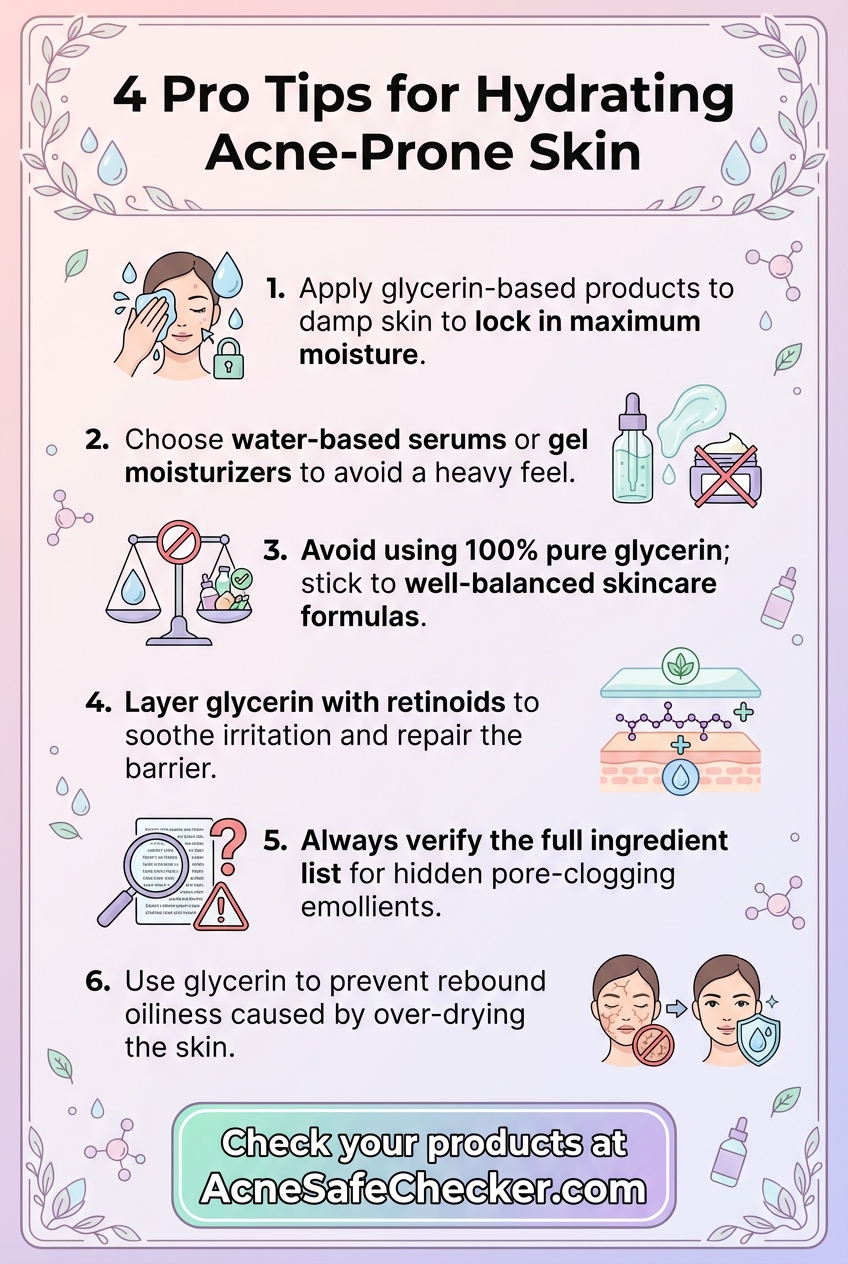
Many acne treatments—such as benzoyl peroxide, salicylic acid, and retinoids—work by increasing cell turnover or reducing oil. A side effect of these treatments is often a compromised skin barrier, leading to redness, flaking, and sensitivity. Glycerin helps repair this barrier by keeping the skin hydrated and resilient.
Prevents Rebound Oiliness
When skin becomes excessively dry (often from over-cleansing), it may overcompensate by producing more sebum. By providing oil-free hydration, glycerin keeps the skin’s moisture levels balanced, which can actually help regulate oil production over time.
Enhances Healing
Acne is an inflammatory condition. Glycerin has been shown to have soothing properties that can help calm the skin and speed up the natural healing process of existing blemishes.
How to Use Glycerin Correctly for Best Results
To get the most out of glycerin without any perceived heaviness, follow these professional tips:
- Apply to Damp Skin: Since glycerin is a humectant, it needs water to work with. Applying your glycerin-rich serum or moisturizer to slightly damp skin helps it "lock in" that moisture immediately.
- Layer Wisely: If you have oily skin, look for glycerin in water-based serums or gel-moisturizers. These provide the hydration you need without the occlusive weight of a heavy cream.
- Check the Full Label: Always look for products labeled "non-comedogenic" or "oil-free" if you are acne-prone. This ensures that while glycerin is doing its job, no other ingredients are working against your pores.
- Don't Use It Pure: Never apply 100% pure glycerin to your face. In very dry environments, pure glycerin can actually draw moisture out of your skin if there isn't enough humidity in the air. Stick to well-formulated skincare products.
The Bottom Line
In the complex world of skincare ingredients, glycerin is a rare gem: it is effective, incredibly well-tolerated, and—most importantly—completely non-comedogenic. It provides the essential hydration that acne-prone skin needs to heal and function correctly without the risk of clogging pores.
If you’ve been avoiding glycerin out of fear of breakouts, you can rest easy. It isn't just safe for your skin; it's likely the missing piece in your routine to achieve a clear, hydrated, and healthy complexion.