
Finding the perfect makeup primer is often a high-stakes gamble for those of us with acne-prone skin. You want that flawless, long-lasting finish, but you don't want to wake up the next morning to a fresh crop of inflammatory papules.
Is Your Routine Acne-Safe?
Do not guess. Instantly check your products for pore-clogging ingredients with our AI-powered tool.
Check Ingredients NowThe e.l.f. Power Grip Primer has taken the beauty world by storm, praised for its incredible ability to hold makeup in place for hours. But for the acne community, the "grip" that makes it famous also raises a red flag: Is that sticky barrier trapping bacteria and clogging pores?
As a dermatologist, I see patients daily who struggle with acne cosmetica—acne triggered or exacerbated by cosmetic products. Today, we are going to look under the microscopic lens to see if this viral primer is truly a friend or a foe to your skin.
Understanding the Formula: What’s Inside?
To determine if a product is "acne safe," we must look beyond marketing claims and dive into the ingredient list. The e.l.f. Power Grip Primer is primarily a water-based gel. Unlike many traditional primers that rely heavily on heavy silicones (like dimethicone) to smooth the skin, this formula uses a different approach to create its signature tackiness.
The Key Ingredients
- Hyaluronic Acid (Sodium Hyaluronate): A humectant that draws moisture into the skin. This is generally very safe for acne-prone skin as it provides hydration without adding oil.
- Niacinamide (in the 4% Niacinamide version): This is a powerhouse for acne-prone individuals. It helps regulate sebum (oil) production and calms redness associated with active breakouts.
- Water-Based Solvents: The formula avoids heavy oils, which is a major win for those with oily or combination skin types.
Is it Comedogenic? The Science of Pore Clogging
The term "non-comedogenic" is often used loosely in the beauty industry. In dermatology, we look for ingredients that are known to provoke the formation of comedones (blackheads and whiteheads).
The e.l.f. Power Grip Primer is silicone-free and oil-free. Silicones aren't inherently comedogenic for everyone, but for some, they create an occlusive film that can trap sweat and sebum, leading to congestion. By removing silicones from the equation, e.l.f. has already reduced the risk for many users.
The "Grip" Mechanism and Your Pores
The sticky texture of the primer comes from polymers like PEG-150 Distearate. While these ingredients are not typically considered comedogenic, their function is to create a film on the skin.
Scientific perspective: If you have active acne, the primary concern with a "grip" primer isn't necessarily that the ingredients themselves plug the pore, but rather how well they "seal" everything underneath. If you apply this primer over skin that hasn't been properly cleansed, or if you don't remove it thoroughly at night, that film can trap environmental pollutants and dead skin cells against the dermal surface.
The Niacinamide Factor: A Bonus for Acne Sufferers
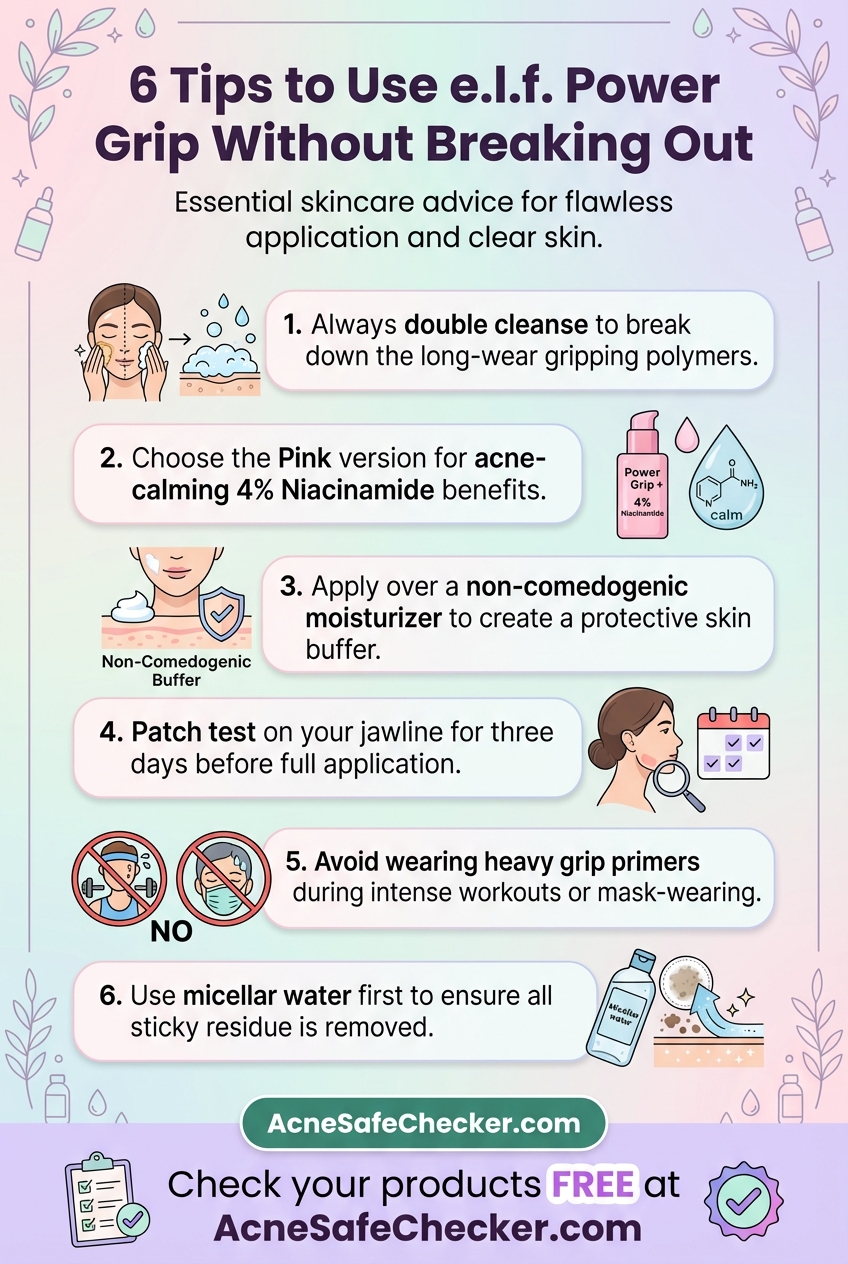
e.l.f. offers two versions of the Power Grip Primer: the original (blue) and the Niacinamide-infused version (pink). For those struggling with acne, the pink bottle is often the superior choice.
Niacinamide (Vitamin B3) is clinically proven to:
- Strengthen the skin barrier: Reducing the likelihood of irritation from other acne treatments (like retinoids).
- Reduce inflammation: Helping to flatten red, angry pimples.
- Minimize the appearance of pores: By keeping them clear of excess oil.
Practical Advice for Using e.l.f. Power Grip with Acne
If you want to try this primer but are worried about breakouts, follow these dermatologist-recommended steps to minimize risk:
1. The Double Cleanse is Non-Negotiable
Because this primer is designed to be "power gripping" and long-wear, it doesn't always wash off easily with a gentle water-based cleanser alone. Use an oil-based cleanser or micellar water first to break down the primer and makeup, followed by a medicated or gentle gel cleanser to clean the skin itself.
2. Check Your Layering
Never apply primer directly over "dirty" skin. Ensure you have applied a lightweight, non-comedogenic moisturizer first. This creates a thin buffer between your pores and the gripping polymers of the primer.
3. Patch Test First
Acne-prone skin is often sensitive skin. Apply a small amount of the primer to your jawline for three consecutive days. If you don't see any small bumps or redness, it is likely safe for your full face.
4. Watch for "Maskne"
If you wear a mask or sweat heavily while wearing this primer, the occlusive nature of the "grip" can increase the risk of friction-induced breakouts. Save the heavy grip for special occasions or cooler environments if you are highly prone to congestion.
Conclusion: The Final Verdict
Is the e.l.f. Power Grip Primer acne safe? Generally, yes.
Because it is oil-free, silicone-free, and contains hydrating ingredients like Hyaluronic Acid, it lacks the most common triggers for cosmetic acne. The addition of Niacinamide in the pink version even offers therapeutic benefits for oily skin types.
However, the very thing that makes it great—its longevity and film-forming ability—means you must be diligent with your evening skincare routine. As long as you are committed to a thorough double-cleanse at the end of the day, the e.l.f. Power Grip Primer is a safe, effective, and budget-friendly addition to an acne-prone makeup kit.