
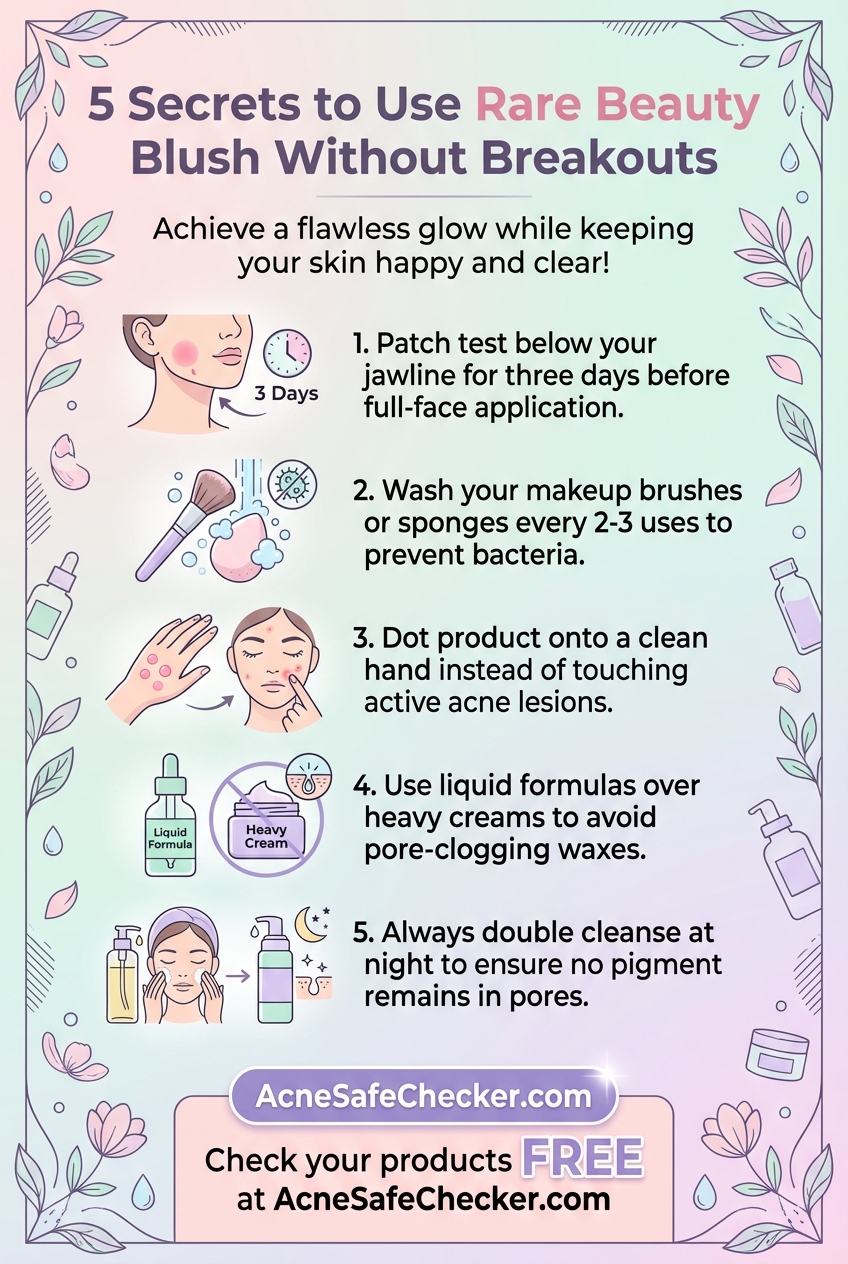
Finding the perfect flush of color shouldn’t come at the cost of your skin’s clarity. If you navigate the world of social media, you’ve undoubtedly seen the iconic Rare Beauty Soft Pinch Liquid Blush. It is celebrated for its intense pigment and seamless blendability. However, for those of us with acne-prone or sensitive skin, the primary question isn't how it looks, but rather: Will it break me out?
Is Your Routine Acne-Safe?
Do not guess. Instantly check your products for pore-clogging ingredients with our AI-powered tool.
Check Ingredients NowAs a dermatologist, I often see patients who have carefully curated their skincare routines, only to have their progress derailed by "acne cosmetica"—acne triggered or exacerbated by makeup. Today, we are performing a deep dive into the Rare Beauty blush ingredients list through a clinical lens to determine if it is truly acne-safe.
Understanding the Basics: What Does 'Acne-Safe' Actually Mean?
Before we dissect the specific formula, it is important to clarify terminology. The term "acne-safe" isn't a regulated legal term. Usually, it implies that a product is non-comedogenic, meaning it is formulated to avoid clogging pores.
In dermatology, we use the Comedogenic Scale (ranging from 0 to 5) to predict how likely an ingredient is to cause a blockage in the pilosebaceous unit (the pore). A score of 0-2 is generally considered safe for acne-prone individuals, while 4-5 are high-risk triggers. However, the overall formulation matters more than a single ingredient in isolation.
Rare Beauty Soft Pinch Liquid Blush: Ingredient Breakdown
The Rare Beauty Soft Pinch Liquid Blush is a sophisticated emulsion. Unlike many traditional cream blushes that rely on heavy waxes or oils (like coconut oil or cocoa butter), this formula is primarily silicone and ester-based.
The Role of Silicones (Dimethicone)
One of the primary ingredients in Rare Beauty blush is Dimethicone. In the world of "clean beauty," silicones are often unfairly vilified. From a dermatological perspective, Dimethicone is breathable and non-comedogenic. It creates a smooth barrier that prevents moisture loss without suffocating the pore. For most acne patients, silicones are perfectly safe.
Botanical Extracts: Gardenia, Lotus, and Water Lily
Rare Beauty highlights a botanical blend of Gardenia Fruit Extract, Nelumbo Nucifera (Lotus) Flower Extract, and Nymphaea Odorata Root Extract. These are soothing antioxidants. For acne-prone skin, inflammation is a major component of the disease. Ingredients that calm the skin can theoretically help mitigate the redness associated with active breakouts.
The Solvent: Isododecane
This is a common solvent that helps the product spread easily and dry down to a weightless finish. It has a comedogenic rating of 0, making it an excellent choice for oily and congested skin types because it doesn't leave a greasy residue.
Potential Red Flags: What to Watch Out For
While the general formula is quite clean, there are a few nuances every acne sufferer should know:
1. High Pigment Concentration
Rare Beauty is famous for being incredibly pigmented. While the pigments themselves (iron oxides, lakes) are generally safe, the density of the product means a little goes a long way. Over-applying any product can lead to physical buildup on the skin, which may trap sweat and bacteria.
2. The Absence of Ethylhexyl Palmitate
Many liquid and cream blushes use Ethylhexyl Palmitate as a texture enhancer. This ingredient is a known comedogenic trigger (scoring a 4 out of 5). One of the reasons Rare Beauty often ranks well for acne-prone skin is the absence of this specific fatty acid derivative in the liquid formula.
Scientific Explanation: Why Liquid Formulas Often Beat Creams
For my patients struggling with cystic or hormonal acne, I generally recommend liquid or powder formulas over heavy creams. Solid cream blushes often require thickeners like Beeswax, Synthetic Wax, or Myristyl Myristate to maintain their shape. These waxes can create an occlusive "seal" over the pore, which is a recipe for whiteheads.
Because Rare Beauty is a fluid emulsion, it relies on volatile alcohols or light esters that evaporate or sit lightly on the surface, significantly reducing the risk of follicular occlusion.
Practical Steps for Using Rare Beauty Blush on Acne-Prone Skin
If you want to enjoy this viral favorite without risking a flare-up, follow these professional guidelines:
- The Patch Test: Apply a small amount of the blush to the area just below your jawline for three consecutive days. If no inflammatory papules appear, you are likely safe to use it on your cheeks.
- Clean Your Tools: If you apply the blush with a sponge or brush, wash it every 2-3 uses. Bacteria buildup on makeup tools is a more common cause of "makeup acne" than the makeup ingredients themselves.
- Avoid Direct Applicator Contact: To keep the bottle sterile, avoid touching the doe-foot applicator directly to active acne lesions. Instead, dot the product onto a clean hand or palette first.
- Double Cleanse: Even the most acne-safe makeup needs to be removed thoroughly. Use a micellar water or a gentle oil cleanser followed by a water-based cleanser at night to ensure no pigment remains in the pores.
The Final Verdict
Is Rare Beauty Soft Pinch Liquid Blush acne-safe? Yes, for the vast majority of people.
The formulation avoids the most common "pore-clogging" offenders like coconut oil, lanolin, and ethylhexyl palmitate. Its reliance on lightweight silicones and botanical extracts makes it a much safer bet than traditional cream sticks. However, everyone's skin chemistry is unique. If you have extremely reactive skin, always check the specific shade's ingredient list, as pigment variations can occasionally introduce different components.
By prioritizing hygiene and proper removal, you can achieve that signature Rare Beauty glow without compromising your skin's health.