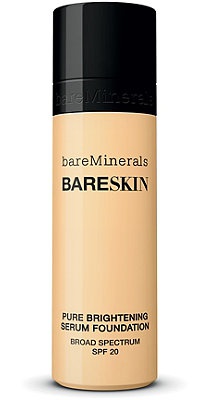
bareMinerals Bareskin Serum Foundation Spf 20
bareMinerals Bareskin Serum Foundation SPF 20 is a unique hybrid product that combines the coverage of a foundation with the lightweight, fluid feel of a skincare serum. Designed to provide a natural 'no-makeup' look, this formula utilizes non-chemical SPF coverage through Titanium Dioxide, making it a popular choice for those who prefer mineral sunscreens. While it avoids traditional binders and fillers, the formula relies on Coconut Alkanes and Caprylic/Capric Triglyceride to achieve its signature silky slip and skin-mimicking finish. The inclusion of Silica helps provide a soft-focus effect, blurring imperfections while maintaining a dewy glow. Because it is formulated as a serum, the texture is exceptionally thin and breathable, yet it offers buildable coverage. However, users should be mindful of how the coconut-derived emollients interact with their specific skin barrier, as these ingredients provide the occlusive properties necessary for the foundation's lasting power and smooth application.
Our Analysis
Our analysis classifies this product as having a MODERATE comedogenic risk. The primary concern lies in the high concentration of Coconut Alkanes (rated 4/5), which are positioned in the top three ingredients. While these provide a luxurious, serum-like texture, they are highly occlusive and can trap sebum and bacteria within the pores. Additionally, Caprylic/Capric Triglyceride (rated 2/5) is present; although it is a more refined version of coconut oil, it can still trigger breakouts for some sensitive individuals. Users with persistent congestion or active acne should monitor their skin closely when using this serum foundation to prevent potential flare-ups.
Skin Type Recommendations
This foundation is best suited for dry to normal skin types that require extra emollience and a dewy finish. However, it is not recommended for oily or highly acne-prone skin due to the pore-clogging potential of coconut derivatives. Sensitive skin should patch test to ensure no reactive breakouts occur.
Flagged Ingredients
Derived from coconut fatty acids. While lighter than pure oil, it retains occlusive properties that can trap bacteria.
Fractionated coconut oil; removed most clogging long-chain acids but can still affect some.
MACR Analysis
5-Axis AI-Powered Risk Assessment
The MACR analysis shows lower risk because it accounts for ingredient position and concentration in the formula.
Recommendations
This sunscreen is not ideal for those highly prone to fungal acne or experiencing frequent breakouts from coconut-derived ingredients. Users with normal or dry skin may tolerate it better.
Individuals with normal skin types seeking sun protection, Those not sensitive to coconut-derived ingredients, Users looking for a sunscreen with a high concentration of mineral UV filters
Oily skin types, Acne-prone skin, Sensitive skin, Individuals with known sensitivities to plant extracts or certain preservatives
Individuals with a history of fungal acne (Malassezia folliculitis), Those who consistently break out from coconut oil or its derivatives, Highly sensitive skin that reacts to multiple ingredients
- •Patch test before full application, especially if you have sensitive or acne-prone skin.
- •Ensure thorough cleansing at the end of the day to remove any potential pore-clogging residue.
- •Monitor skin for any signs of increased breakouts or fungal acne symptoms.
Overall Risk Score
Lower is better
Score by Skin Type
Lower is better
Same product, different risks based on your skin type
This leave-on sunscreen has a moderate overall risk score, primarily driven by potential fungal acne triggers and user-reported breakouts associated with coconut-derived ingredients and esters. The presence of penetration enhancers and Vitamin C derivative also contributes to minor risks. It poses the highest risk to acne-prone and oily skin types.
Risk Breakdown
Why This Score?
The overall score is calculated by weighting the risk on five axes: Plugging Risk (PR), Barrier Risk (BR), Fungal Risk (FR), Oxidation Risk (OR), and User-Reported Risk (UR). Ingredients are assessed for their inherent properties, concentration (top 5 weighted higher, last third weighted lower), and potential for synergistic effects. This product's moderate score is influenced by the inclusion of coconut-derived emollients and esters which have moderate fungal and user-reported risks, as well as a penetration enhancer.
Main factors:
- •Fungal Risk (FR) due to coconut-derived ingredients and esters
- •User-Reported Risk (UR) from coconut-derived ingredients, esters, and mineral pigments
- •Barrier Risk (BR) from the penetration enhancer Propylene Carbonate
Reducing factors:
- •The product is a leave-on, so inherent risks are not reduced by a rinse-off mechanism.
- •Many ingredients are generally considered safe and stable (e.g., Titanium Dioxide, Glycerin, Hyaluronic Acid).
- •The concentration of flagged ingredients in the latter half of the list is lower, reducing their overall impact.
Skin Type Considerations
This analysis uses the Multi-Axis Comedogenic Risk (MACR) system. Results are AI-estimated and cannot account for actual ingredient concentrations. Individual reactions may vary. Consult a dermatologist for personalized advice.